Food Systems Transformation on Global Climate Agenda at COP28
28th Conference of the Parties (COP28) in UAE
COP28 Presidency put food systems transformation on the global climate agenda
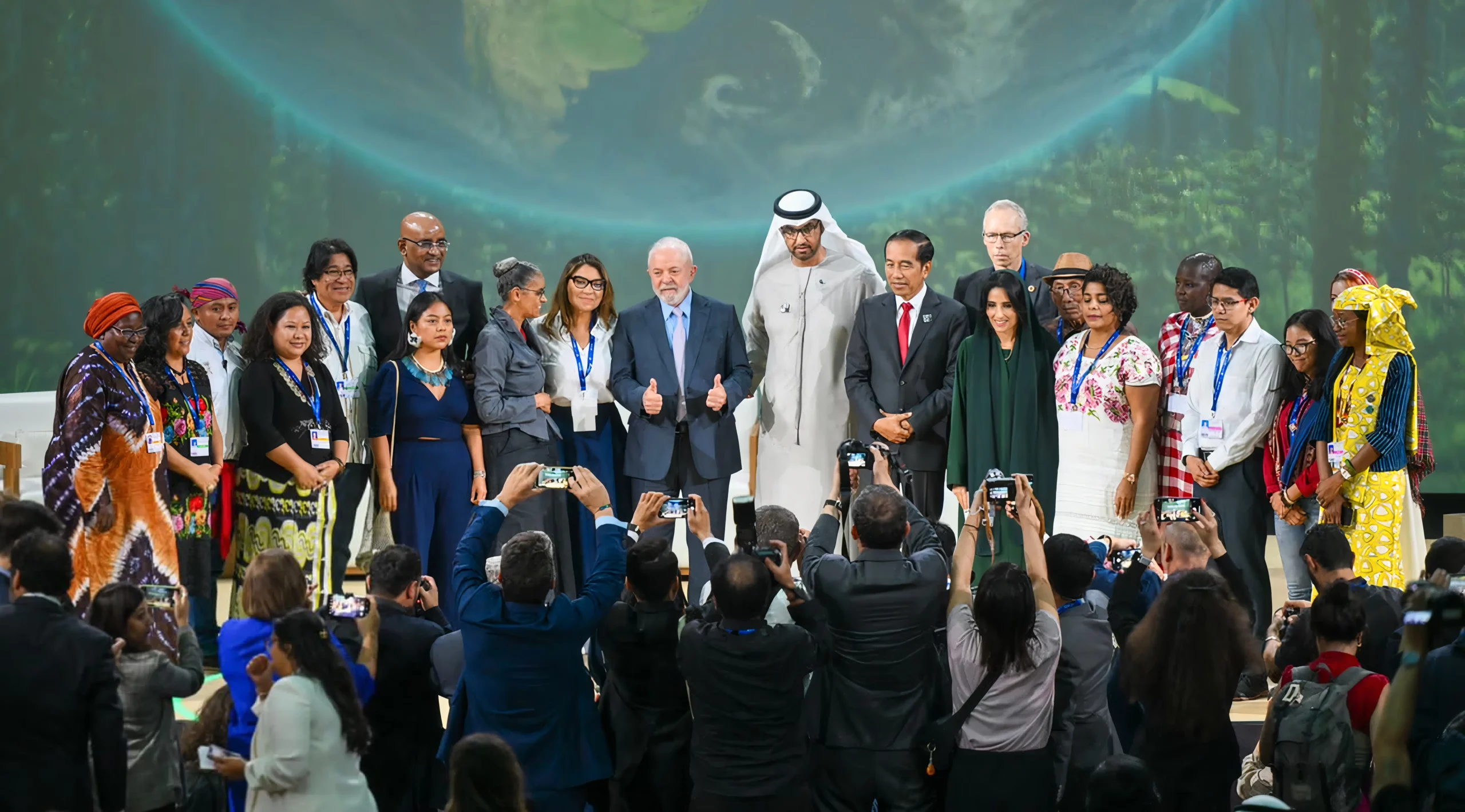
The COP28 Presidency put food systems transformation on the global climate agenda as more than 130 world leaders met at the 28th such summit held in Dubai, UAE this week.
A range of initiatives supporting food and climate action were announced during the first thematic session of the World Climate Action Summit. The event was featured by Giorgia Meloni, Prime Minister of Italy, Fiamē Naomi Mataʻafa, Prime Minister of Samoa, Samia Suluhu Hassan, andJoko Widodo, President of Indonesia and Anthony J. Blinken, Secretary of State for the United States of America.
More than $2.5 billion has been mobilized by the global community to support the food-climate agenda. H.E. Mariam bint Mohammed Almheiri, UAE Minister of Climate Change and Environment and COP28 Food Systems Lead announced this during the session.
Over 130 countries – representing over 5.7 billion people, 70 per cent of the food we eat, nearly 500 million farmers and 76 percent of total emissions from the global food system – have signed up to the leaders-level ‘COP28 UAE Declaration on Sustainable Agriculture, Resilient Food Systems, and Climate Action.’
The UAE and the Bill & Melinda Gates Foundation launched a $200 million partnership for Food Systems, Agriculture Innovation and Climate Action. This is focused on agricultural research, scaling agricultural innovations and funding technical assistance for implementing the Declaration.
Addressing both global emissions and protecting the lives and livelihoods of farmers living on the frontline of climate change are core elements of the COP28 Food Systems Agenda.
COP28 UAE
COP28 UAE Presidency puts food systems transformation on Global Climate Agenda
Dubai, 1 December 2023
Landmark agriculture, food and climate action declaration
The COP28 Presidency today announced that 134 world leaders have signed up to its landmark agriculture, food and climate action declaration. The mobilization of more than USD$2.5 billion in funding to support food security while combatting climate change was also announced. This is a new partnership between the UAE and the Bill and Melinda Gates Foundation for food systems innovation in the fact of climate change.
The ‘COP28 UAE Declaration on Sustainable Agriculture, Resilient Food Systems, and Climate Action’ (the Declaration) was announced at a special session of the World Climate Action Summit (WCAS). This was led by Joko Widodo, President of Indonesia Giorgia Meloni, Prime Minister of Italy, Fiamē Naomi Mataʻafa, Prime Minister of Samoa and Anthony J. Blinken, Secretary of State for the United States of America. The Declaration addresses both global emissions while protecting the lives and livelihoods of farmers who live on the frontlines of climate change.
Food systems and agriculture have marked impact on climate
“There is no path to achieving the goals of the Paris Climate Agreement and keeping 1.5C within reach, that does not urgently address the interactions between food systems, agriculture, and climate. ”
– H.E. Mariam bint Mohammed Almheiri, UAE Minister of Climate Change and Environment and COP28 Food Systems Lead.
“Countries must put food systems and agriculture at the heart of their climate ambitions. This addresses both global emissions and protecting the lives and livelihoods of farmers living on the front line of climate change. Today’s commitment from countries around the world will help to build a global food system fit for the future,” she added.
The 134 signatory countries to the Declaration are home to over 5.7 billion people and almost 500 million farmers, produce 70 percent of the food we eat, and are responsible for 76 percent all emissions from global food systems or 25 percent of total emissions globally.
Address hunger and climate change simultaneously
Endorsement of the Declaration will help in strengthening food systems, building resilience to climate change, reducing global emissions, and contributing to the global fight against hunger, aligned with the UN Sustainable Development Goals (SDGs). The Declaration – the first of its kind for the COP process – stresses the need for common action on climate change, which adversely affects a large portion of the world’s population, particularly those living in vulnerable countries and communities.
“Today signals a turning point, embedding sustainable agriculture and food systems as critical components in both dealing with climate change and building food systems fit for the future. Together we will deliver lasting change for families, farmers and the future,” said H.E Almheiri.
One third of greenhouse emmissions linked to food supply
While food systems are vital for meeting societal needs and enabling adaptation to climate impacts, they are also responsible for as much as a third of global greenhouse gas emissions. Many smallholder farmers in low- and middle-income countries are also facing heightened vulnerability to climate change.
Key announcements made at the session today include:
- The UAE and the Bill & Melinda Gates Foundation launched a USD$200 million partnership for Food Systems, Agriculture Innovation and Climate Action, focused on agricultural research, scaling agricultural innovations and funding technical assistance for implementing the Declaration.
- The UAE is joining the CGIAR, a global partnership that unites international organizations engaged in research about food security, resilience, and climate adaptation.
- COP28 and a group of partners announced a collaborative effort to offer countries quality technical cooperation and to help deliver on the objectives of the Declaration. The partners behind the Technical Cooperation Collaborative pledged more than USD$200 million in new and newly aligned support, while also committing to increase coordination across their wider portfolios.
- COP28 UAE, together with the World Business Council on Sustainable Development (WBCSD) and the Boston Consulting Group (BCG), supported by the UN Climate Change High-Level Champions, launched the Action Agenda on Regenerative Landscapes. This will see leading food and agriculture organizations join forces to scale regenerative agriculture, transitioning 160 million hectares to regenerative agriculture by 2030, accompanied by USD$2.2 billion in future investment, and engaging 3.6 million farmers world-wide.
- The High-Level Champions, in collaboration with non-government actors including farmers, Indigenous Peoples, consumers, cities, youth, businesses, financial institutions, philanthropies and others, launched a Call to Action for Transforming Food Systems for People, Nature, and Climate, in support of the Declaration and to highlight the urgent need to take action on food systems by all actors.
The COP28 Food Systems and Agriculture Agenda has four pillars, covering national leadership, non-state actors, scaling up innovation, and finance.
COP28 is also working with representatives from every stage of the food system and agriculture value chain, including farmers, civil society, businesses, and local governments to accelerate the transition to regenerative agriculture.
The full list of countries who have signed the Declaration can be found here.
What this could mean for fumigators in South Africa
Since the Montreal Protocol of 2004, countries have been encouraged to switch fumigation products for lower ozone depletion. South Africa took the decision to phase out Methyl Bromide by March 2015. An advantage of phasing out methyl bromide is a reduced risk contribution to the depletion of the ozone layer. You can read more about this in this article: Methyl bromide ban holds significant challenges for food industry
After a scramble by South African fumigators to find an alternative fumigant to methyl bromide, sulfuryl fluoride (brand name ProFume gas fumigant) was introduced to South Africa in 2019.
Sulfuryl Fluoride is practically non-reactive in the atmosphere. So, it is not expected to destroy ozone. Sulfuryl fluoride has replaced many uses of methyl bromide. Methyl bromide is classified as a “Class I Ozone Depleting Substance” by the EPA. This would indicate that expanded use of ProFume fumigant gas could contribute to COP28’s indicated goal for food systems transformation on climate agenda.