Bed Bugs
Paris Fashion Week made more headlines than it hoped. Bed Bugs on the metro, bed bugs in the cinemas, bed bugs in high-end restaurants… and of course, residents tossing mattresses by the hundreds to the trash. Why does Paris have a Bed Bug problem?
The headlines in the media report this as an unprecedented outbreak of bed bugs in Paris. Is it only Paris that has a bed bug problem? Experts suggest this is more of a growing global trend. Bed bugs, like other pests, have lived with humans for millenia. Feasting off of human blood, bed bugs tend to nest where they have easy access to a ready food supply. Any area where a host is inclined to remain for long periods of time is inclined to a bed bug infestation: mattresses are ideal. A sleeping human offers uninterrupted feeding. Any soft furnishing is also suitable: a cosy TV chair, for example. This explains the emergence of bed bugs across all sectors of the city’s leisure sector including movie houses, public transport and restaurants.
Bed Bug

Bed bugs feed on human blood
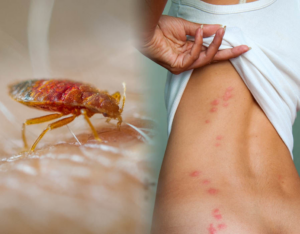
A history of bed bug problems
Bed bugs and humans are as common to each other as dogs and fleas. Cave drawings depict bed bugs. Photographs of them were captured on the first cameras in the 1800’s. Bed bugs have found a sleeping human to be a delicious companion.
Culturally, bed bugs have also shaped human history. Some historians suggest the annual practice of spring cleaning may have begun as an attempt to flush out bed bugs. They are less active during the colder winter months, but become reinvigorated in the spring and summer.
Chemical warfare on bed bugs
Insecticide has been used to quell bed bugs for over a century. DDT was used before the 1950’s but by 1956 pest controllers reported deminishing effectiveness of this potent chemical. The repetitive exposure of bed bugs to DDT led to the survival of bed bugs with genetic mutations that allowed them to survive DDT exposure. this gave rise to newer generations with the same mutations. A new chemical was introduced; pyrethroids–synthetic insecticides widely used for residential pests. However, there was an unforeseen consequence of DDT resistance: bed bugs with DDT resistance demonstrated resistance to other pesticides, including pyrethroids, even if they had never encountered pyrethroids. This phenomenon is known as cross-resistance.
DDT was banned in 1972 which compelled the United States to turn to organophosphates. These chemicals largely eliminated bed bugs from the developed world. However, toxic effects on human health were discovered and they were banned too. This gave the bugs a break. Broader international trade rules also opened the exchange of goods across the world. “Bed bugs became a problem after we went through the ban on organophosphates indoors,” says Jody Gangloff-Kaufmann, an entomologist at the New York State Integrated Pest Management program at Cornell University. The bugs came back in the early 2000s, spread primarily along trade routes from developing nations to industrialized countries, and flourished in a new world with less aggressive chemical attacks.
In 2010, cities like New York experienced massive bed bug infestations. Alarming sightings closed retail stores in Soho and South Street Seaport. Even workplaces weren’t immune, as the insects infiltrated Time Warner’s headquarters near Central Park as well.
Knockdown Resistance a root cause for bed bug resurgence
The current surge in bed bug infestations is not merely a revival of a longstanding problem; it is a complex issue intertwined with the development of resistance to insecticides. This mechanism is known as knockdown resistance. This mechanism, along with three other main resistance mechanisms, has enabled these insects to defy chemical-intensive control methods
Knockdown resistance is a significant factor contributing to the resistance exhibited by bed bugs to insecticides, especially pyrethroids. The mechanism plays a central role in countering the action of these insecticides, which target the nervous system of bed bugs, causing paralysis and eventual death. Knockdown resistance provides the genetic adaptation that provides bed bug populations with resistance to insecticides. It inhibits the effectiveness of certain insecticides. Bed bugs with the mutation have a genetic advantage that allows them to survive exposure to these chemicals.
Pest Management Protocols.
Unlike mosquitos and ticks, which government groups address with wide-scale, community-wide spraying and eradication efforts, bed bugs are seen more as an individual, rather than a societal, problem.
Bed bugs don’t transmit diseases like mosquitos and ticks do. While they feed on human blood, they don’t pass on whatever they pick up, since they have a unique ability to fracture the DNA of pathogens they ingest so they are no longer capable of causing disease. “If you imagine the DNA of a virus like polio or HIV or influenza as a glass vase, once it is ingested by a bed bug, it shatters,” says Gail Ridge, an associate scientist at The Connecticut Agricultural Experiment Station, a state and federally funded research facility. “That makes controlling bed bugs a hard sell for government intervention, since they don’t technically cause public harm other than a general sense of anxiety and discomfort.
Combined Arms Management: Physical and Chemical treatments for bed bugs
The best way to irradicate bed bugs is a combination of physical and chemical treatments. Bed bugs do not stray far from their food source. A professional pest company will examine the area within close proximity of the infected bed; under the box frame, head board, cracks in the floorboards, drapes, curtains and wall paper as well as the linens, pillows and mattress. Any form of ‘clutter’ can be a hiding area for bed bugs.
In multi-home establishments (apartments) it is important to seal any access routes from neighbouring homes too.
Vacuuming and high temperature treatments (steam clean, hot wash and tumble drying) are effective on clothing and linens. The most effective bed bug pesticides are available to commercial pesticide applicators only.
Insecticides may be applied as liquids directly to cracks, crevices, bed frames, baseboards, and other similar sites, or they may be applied as dusts in cracks and crevices. Pesticides aren’t generally applied to mattresses or bedding because of potential risk to people. Over-the-counter total-release aerosol foggers has been shown to be ineffective for bed bug control and potentially harmful to residents; they are not recommended.
Liquid insecticide formulations used by professional pest controllers include:
- Products containing the botanical insecticide pyrethrin, which gives quick knockdown but little long-term control
- Various synthetic pyrethroid products (e.g., cyhalothrin, bifenthrin, deltamethrin, and permethrin)
- Mixtures of pyrethroids and neonicotinoids (e.g., Temprid and Transport)
- Various botanical oils
- Newer types of products including the pyrrole insecticide chlorfenapyr (Phantom) and the insect growth regulator (IGR) hydroprene (Gentrol)
Aprehend is a fungus-based treatment used by licensed pest control specialists. The treatment is a spore in a liquid form that is sprayed on affected areas; the contact with the fungus gives the bugs a dermal infection that kills them.
Sulfuryl Fluoride used for bed bugs
Fumigation using the active ingredient sulfuryl fluoride is commercially available for bed bug control and can be highly effective in appropriate situations.
Field Evaluations of Sulfuryl Fluoride Fumigation for Control of the Common Bed Bug (Hemiptera: Cimicidae), Using a 1.9× Dosage Factor in Motor Vehicles and Filled Cargo Trailers In this study, a mini van and a tightly packed trailer (85% capacity) were infected with bed bugs and fumigated with sulfuryl fluoride using 1,9x dosage factor. Upon aeration the sentinel bugs, nymph and eggs were removed and monitored for 23 days post fumigation. It was concluded sulfury fluoride was 100% effective against bed bugs through all life stages.
Future controls for bed bugs
Cockroaches are the natural predator of bed bugs (they consume the eggs) but cockroach control is fundamental to hygiene and pest management… bed bugs may be a challenge far into the future.
Inbreeding is suicide for most species since mating with genetically related members can introduce dangerous, and potentially lethal, mutations. Bed bugs don’t have such limitations; a single female carrying eggs can seed a new colony of bugs in a location as the future generations breed among themselves. “We have seen brother-sister matings for 20 to 30 generations and nothing happens,” says DeVries. “The later generations are just as happy and healthy as the first.”
Resistant bugs are getting hardier and hardier. Cross breeding with different populations makes them even more fertile, says Ridge. She has crossed two different lab populations of bed bugs and found that the fecundity of the females doubled. “I can only assume that’s happening in the wild as well,” she says, especially since bugs from different parts of the world are likely mixing and matching thanks to widespread human travel.”
Integrated pest management remains the only successful means to control bed bugs. While bed bugs can certainly find their way to luxury hotels and hitch a ride home on the Louis Vuitton luggage; the wealthy can afford to treat the problem as it occurs.
For those in tightly packed disadvantaged communities such as nursing homes and hostels, bed bugs become just another burden limited funds cannot control.
As the globe continues its fast paced integration with humans travelling en masse via public transport, goods are shipped worldwide and the common bed bug codes future bugs with DNA to resist chemicals used… Paris is just a foretaste for future cities which will no doubt face bed bugs for centuries yet.