For both safety and efficacy of a fumigant gas job, an effective seal is required for the treatment area. A special tape for sulfuryl fluoride is required.
What’s with the PINK TAPE?
Our sites are clearly distinguishable from any other by the bright banners of PINK tape covering cracks, holes and any other gaps gas could escape through. It is our very own product: designed and engineered to SEAL where ordinary duct tape cannot.
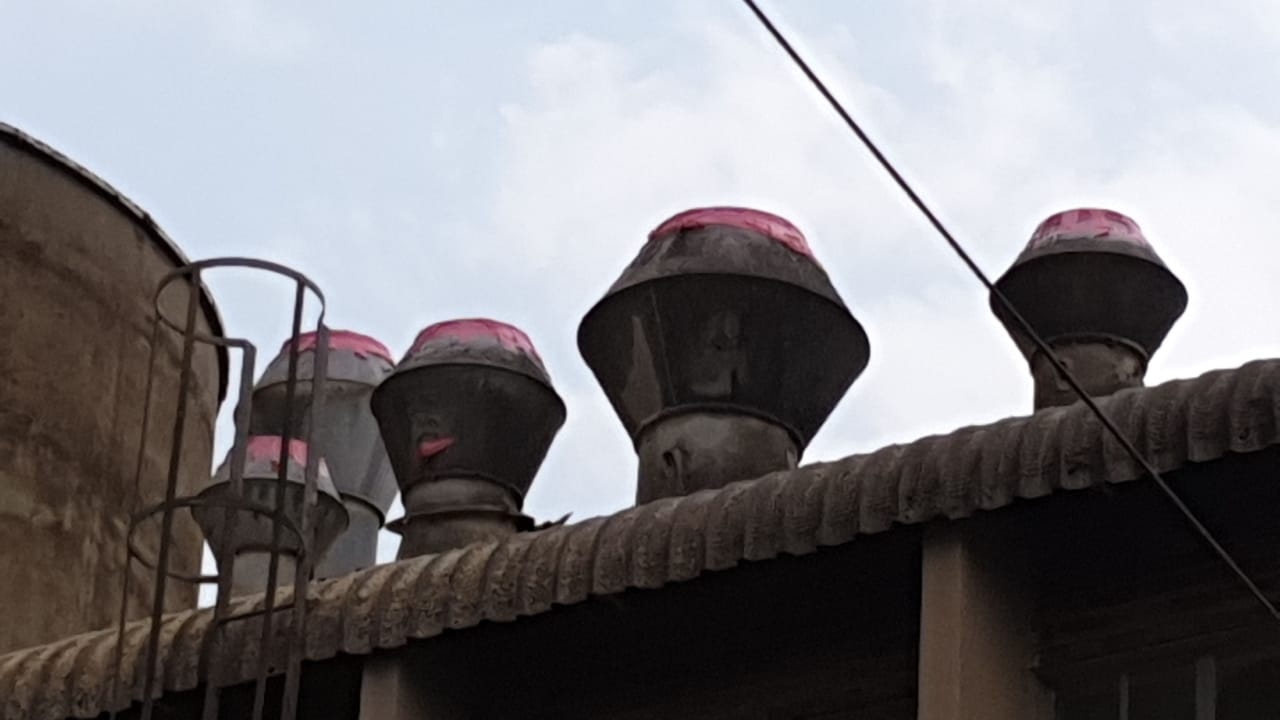

Our famous PINK Tape
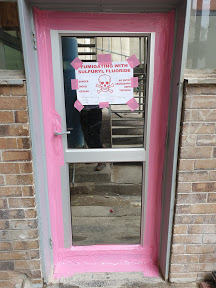
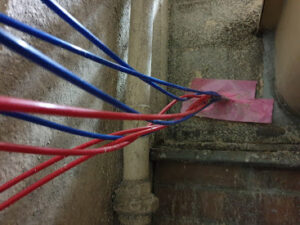
Our Solution to a leaking, seeping problem
Our teams have been flying back and forth to the United States since the Montreal Convention of 2004. At that time we knew methyl bromide would be phased out in South Africa and sulfuryl fluoride could be its replacement.
Sulfuryl fluoride presented with a unique challenge though: chemical properties of the gas worked contra our standard duct tape, (every fumigators Go-to tool to seal a treatment area.) It loosened the glue, the tape became unstuck. Ordinary duct tape is porous to sulfuryl fluoride.
This was not only a health hazard; it compromised the efficacy of the treatment.
We spent many years fine-tuning a workable solution to the problem. The result is our famous PINK tape.
Although it is STRONG when taped, it is easily broken by hand.
It sticks like Superglue and to any surface. This means you can secure lines exactly where needed, hold tarpaulins in place, seal door frames, window frames and key holes.
It is nonporous so the gas cannot seep through the membrane.
A tropical cyclone couldn’t budge it!
Our inaugural tape test in the field coincided with a tropical tempest only the South African Lowveld could throw at us. Hail. Gail force winds. Rain! Buckets of rain!
The project was a large mill. Turrets and chimneys had to be sealed with the tape. Time was, as with any fumigation job, critical.
Our PINK tape remained stuck in place, perfectly intact and assured the treatment was 100% effective.
Why PINK?
Would you EVER expect such a workhorse in pink? No-one else has the colour. It stands out – like us?
We are just proud as punch for this product!
Sulfuryl Fluoride Exposure
Sulfuryl Fluoride Exposure
What are the symptoms of sulfuryl fluoride exposure and how do we safely manage the hazards of this fumigant gas?
The chemical action of Sulfuryl Fluoride on an organism
When sulfuryl fluoride gas is released within a building, it spreads out and seeps into cracks and pores. This allows it to reach pests throughout the structure, including those found within wall voids and porous materials like wood and fabric. When insects or rodents are exposed to sulfuryl fluoride, it releases fluoride into their bodies. With high enough exposures, their cells stop making energy and eventually die.
What happens to sulfuryl fluoride when it enters the human body?
When breathed in, sulfuryl fluoride is rapidly absorbed into the body. There, it breaks down into sulfate, fluoride, and fluorosulfate. These components move in the blood stream to many parts of the body. Collectively, these include the lungs, kidney, spleen, nasal tissues, and brain.
Sulfate and fluorosulfate leave the body in urine rapidly; half-lives of between one and four hours have been reported. In one study, fluoride levels in urine increased quickly after exposure. However, these levels returned to normal after about 12 to 24 hours. Above a certain daily dose, fluoride levels can build up in bones and teeth.
Fumigant Gas Exposure

How is a human exposed to Sulfuryl Fluoride?
After fumigation, those who enter treated buildings may be exposed to very low levels of sulfuryl fluoride in the air. Currently, law requires these levels to be below 1 part per million (ppm) before residents can return. One part per million is about the same as ½ of a drop of water in a full bathtub. Licensed professionals must confirm low levels by using air-monitoring devices. The remaining sulfuryl fluoride dissipates over time; an estimated half-life of about 16 hours has been reported.
Those outside a building may also be exposed to low or moderate levels of sulfuryl fluoride. This may happen while a building is treated or when it is aired out afterward. Tenting reduces leaking during the treatment. In two studies, outdoor air levels of sulfuryl fluoride were measured during a treatment. Levels were less than 1 ppm except during the first six hours of treatment and during ventilation afterward. The highest level detected in the air was about 24 ppm. This was 1.5 metres from the home during ventilation. At 3 metres, the highest level was about 7.5 ppm during ventilation. Levels of sulfuryl fluoride in the outside air were less than 1 ppm after 2 hours of ventilation.
People may also be exposed to low levels of sulfuryl fluoride in their diet. Sulfuryl fluoride is used to fumigate some stored food commodities. It can stick briefly in some oils. When sulfuryl fluoride mixes with proteins in food it can also leave fluoride residues behind. The DAFF (Department of Agriculture, Forestry and Fisheries) sets legal limits for both sulfuryl fluoride and fluoride on food.
What are some signs and symptoms from a brief exposure to sulfuryl fluoride?
In a 2008 case report, a woman spent about three hours inside a tented building being treated with sulfuryl fluoride. According to the report, she experienced stomach pain, vomiting, difficulty breathing, confusion, low blood pressure, convulsions, low blood calcium levels, an abnormal heart rhythm, and death.
In separate studies, rats, rabbits, and dogs breathed air containing sulfuryl fluoride for two weeks. When air levels were held at 100 parts per million (ppm), no health effects were observed in any test animals. This level is 100 times higher than what is legally allowed in homes prior to reentry. At 300 ppm, animals had effects such as increased kidney weight, inflammation in the upper airways, tremors, muscle spasms, and brain tissue damage.
How to safely manage Sulfuryl Fluoride (ProFume)
Pesticide labels require that residents be provided a fact sheet prior to the fumigation of their home. A checklist may also be provided. These materials have information about the preparations that are necessary. Check with the pest control company about additional steps.
- Remove all pets (including fish) and plants. The treatment can be harmful to animals or plants if left inside. Special preparations can sometimes be made for fish tanks.
- Turn off pilot lights and other ignition sources. Think about furnaces, stoves, ranges, hot water heaters, gas refrigerators, etc.
- Remove waterproof mattress and pillow covers or open the seals. When this is not possible, remove the mattress or pillow from the building.
- Remove or double bag* food, feed, medications, and tobacco. This includes food stored in refrigerators and freezers. Items that are in rigid plastic, glass, or metal containers with the manufacturer’s air tight seal may not need to be removed.
*Only special bags provided by the pest control company can be used. - Remove solutions used to develop photographic film.
- Wet soil around the perimeter of the tented building. This can help prevent fumigant loss through the soil and protect adjacent plants.
Further precautions managed by a certified pest control company
Sulfuryl Fluoride is labelled a hazardous chemical and must be stored and transported with strict adherence to such hazardous material protocols.
Fans are used within a structure to quickly dissipate the gas post fumigation. Specially calibrated gas monitoring equipment will measure post fumigation levels to determine when the structure can be safely entered.
Fumico offers complimentary ProFume stewardship training to professional pest management companies. Click here to learn more about this training.