Frequently Asked Questions (FAQs) About Fumigant Use in South Africa: Focus on ProFume (Sulfuryl Fluoride)
ProFume Fumigant Gas (Sulfuryl Fluoride) was introduced into South Africa in 2019 as a viable alternative to methyl bromide which is phased out in accordance to the Montreal Convention. These are the top 10 frequently asked questions (FAQs) people have about fumigant use:
 1. What is ProFume (sulfuryl fluoride) and what is it used for?
ProFume is a brand name for sulfuryl fluoride, a colorless, odorless gas used primarily for structural fumigation and pest control in South Africa. It is highly effective against termites, wood-boring insects, and a wide range of stored product pests. Douglas Products in the USA manufactures ProFume and Fumico is a selected South African distributor.
2. How does ProFume work?
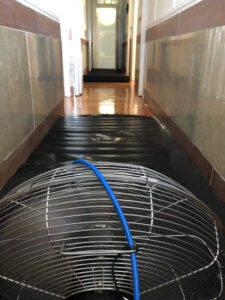
ProFume penetrates deep into wood, soil, and enclosed spaces, disrupting the nervous system of pests and effectively eliminating them. Its gaseous form allows it to reach areas that are difficult to treat with other methods.
3. Is ProFume safe for humans and pets?
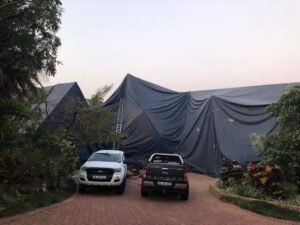
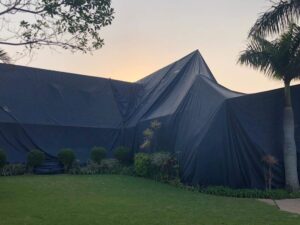
When applied by trained professionals following strict safety protocols, ProFume is safe. The treated area must be properly sealed during fumigation and ventilated thoroughly before re-entry. Humans and pets should not be present during treatment.
4. How long does a ProFume fumigation take?
The fumigation process typically requires 24 to 72 hours, depending on the size of the structure and pest infestation. After treatment, the area must be aerated to remove residual gas before it is safe to enter.
5. What are the environmental impacts of ProFume?
Sulfuryl fluoride is a potent greenhouse gas with a high global warming potential. Therefore, its use is carefully regulated, and fumigators take measures to minimize emissions. Despite this, it is considered a safer alternative to ozone-depleting fumigants like methyl bromide.
6. How does ProFume compare to other fumigants like phosphine or methyl bromide?
- Compared to phosphine, ProFume is non-flammable and better suited for structural fumigation with longer residual activity.
- Compared to methyl bromide, ProFume does not deplete the ozone layer but has a higher greenhouse gas potential. Methyl bromide use is largely phased out in South Africa.
7. Can ProFume be used for food storage fumigation?
ProFume is primarily used for structural fumigation. For stored product fumigation, phosphine remains the preferred fumigant in South Africa due to its effectiveness and regulatory acceptance.
8. What safety measures are taken during ProFume fumigation?
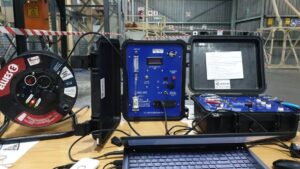
Certified fumigators use specialized equipment to monitor gas concentrations, ensure airtight sealing, and control exposure times. After fumigation, the area is ventilated thoroughly to remove residual gas before people can safely return.
9. How often should fumigation with ProFume be done?
The frequency depends on the risk of pest infestation and previous treatments. Regular inspections by pest control professionals help determine when fumigation is necessary.
10. Where can I find professional fumigation services using ProFume in South Africa?
Look for licensed and certified fumigation companies experienced in ProFume application. Always verify credentials and ask about safety and environmental practices. Fumico offers complimentary stewardship training for professional pest control companies.
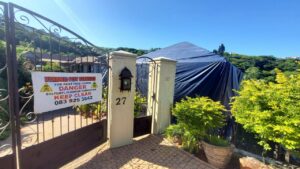
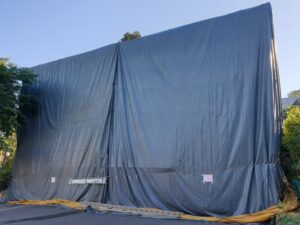
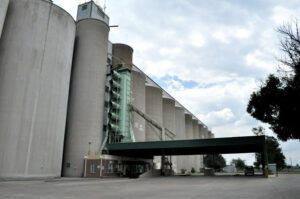
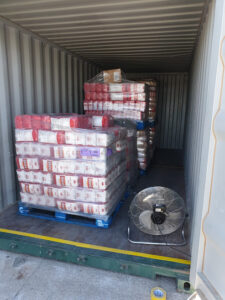
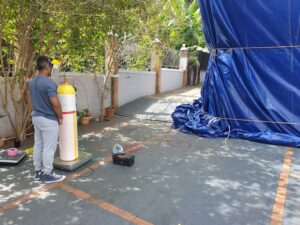
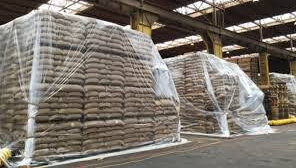
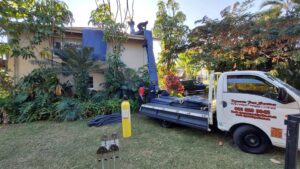
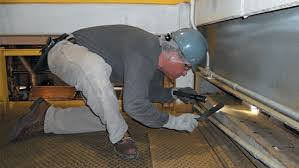
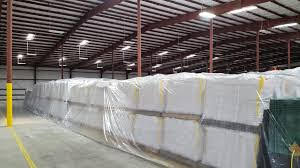
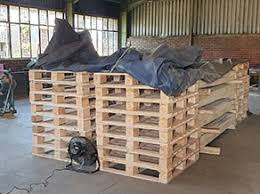
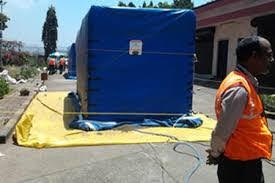
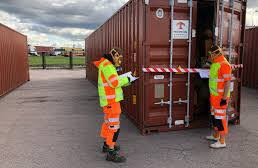
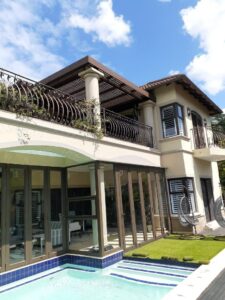
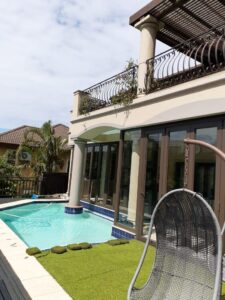
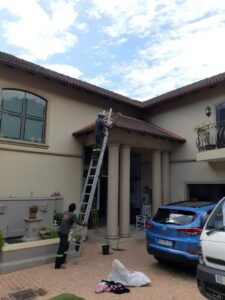
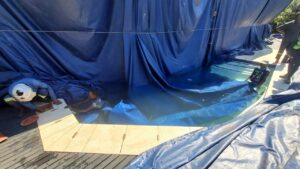
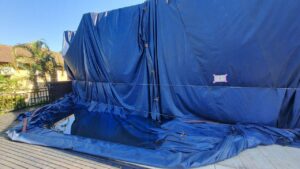
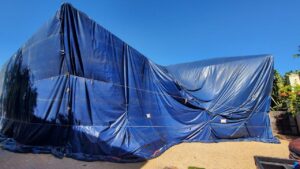
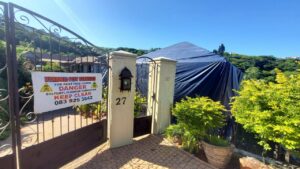
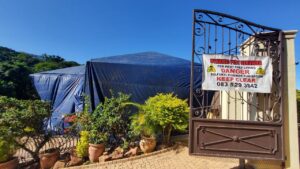
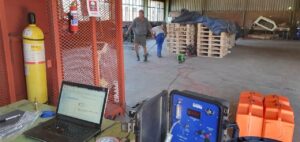
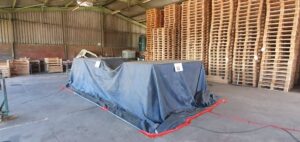
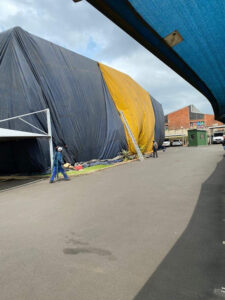
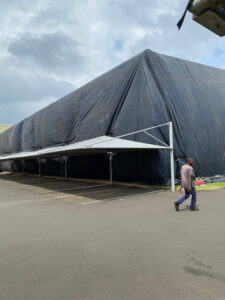
ProFume has quickly gained acceptance in the industry. Here we record snapshots of the teams out and about in the field with ProFume Fumigant Gas.
-
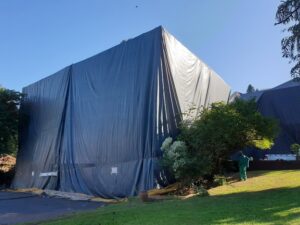
- Pets: The animals died in a fumigation tent.
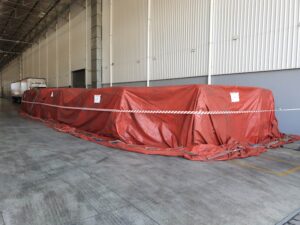
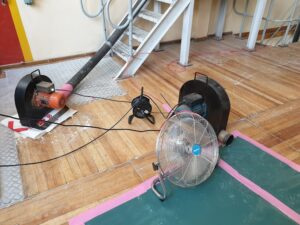
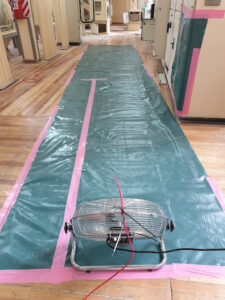
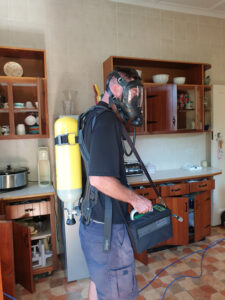

-
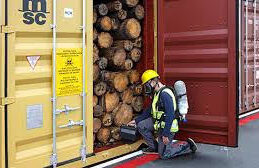
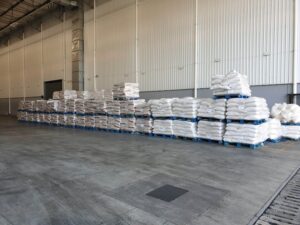
- ISPM15 regulations require fumigation of logs, wooden furniture and pallets prior to export.

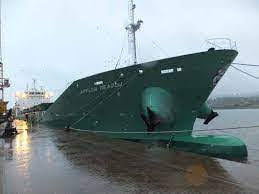
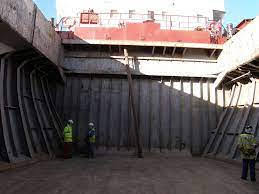
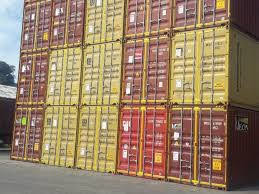
Sulfuryl Fluoride vs Methyl Bromide
Efficacy and Performance
As South Africa continues to move away from methyl bromide as required by the Montreal Protocol of 2004; we compare sulfuryl fluoride vs methyl bromide efficacy and performance using case study analysis of the fumigant gas.
How does sulfuryl fluoride compare with methyl bromide efficacy and performance? Sulfuryl fluoride (SO2F2), also known as ProFume™ (99.8 percent by weight sulfuryl fluoride and 0.2 percent inerts), was developed by Dow Chemical in the late 1950s as a structural fumigant. ProFume™ possesses characteristics for the eradication of structure-infesting insects (Derrick et al. 1990).
ProFume is
- Non-flammable,
- Non-corrosive,
- Does not cause undesirable odors.
- It quickly penetrates structural materials,
- Is effective against a variety of structural pests,
- Dissipates rapidly during aeration
(Chambers and Millard 1995, Stewart 1957 and 1966, Kenaga 1957).
Established Structural Fumigant since 1961
This material is an established structural fumigant, and therefore is considered an alternative to methyl bromide. Since first marketed in the United States in 1961, it has been used to fumigate more than one million buildings, including museums, historic landmarks, rare book libraries, government archives, scientific and medical research laboratories, and food-handling facilities (DowElanco 1994).
Compared to methyl bromide, sulfuryl fluoride penetrates structural materials more rapidly, and is effective against a wide variety of pests, and leaves less residue in materials after aeration. These characteristics make it a viable alternative to methyl bromide in structural fumigation (Derrick et al. 1990).
ProFume Sulfuryl Fluoride
Methyl Bromide

Sulfuryl fluoride is more cost effective than methyl bromide when applied to drywood termites in structural fumigation.
Depending on the pest, environmental conditions, temperatures and other variables, higher levels of sulfuryl fluoride may be required for a lethal dose at post-harvest storage facilities.
Structural Fumigation
An Excellent Broad-spectrum Fumigant
Sulfuryl fluoride is an excellent broad-spectrum fumigant, due to its toxicity to target pests, good dispersion and penetrating qualities. It is commonly used to control a wide variety of household pests, including drywood and Formosan termites (Bess and Ota 1960, Stewart 1957), wood-boring beetles (powder post beetles, death watch beetles, and old house borers), fabric and museum pests (clothes moths and furniture and carpet beetles), cockroaches, bed bugs, snails (Richardson and Roth 1965), brown dog ticks, and rodents (rats and mice) infesting buildings, furnishings, construction materials, and vehicles (DowElanco 1996a, Kenaga 1957, Bess and Ota 1960, Roth 1973).
Fumigant Qualities Compared with Methyl Bromide
In many ways, ProFume™ can be a preferred structural fumigant over the use of methyl bromide. Unlike methyl bromide, sulfuryl fluoride does not react with sulfur-containing materials to form off- or skunk-odors (DowElanco 1996a). ProFume™ passes through nylon and polyethylene sheeting much more slowly than does methyl bromide, so that the gas is easily confined by the plastic tarps commonly used in structural fumigation. Furthermore, sulfuryl fluoride penetrates into and aerates from wood much faster than methyl bromide (DowElanco 1996a, Bond 1984, Grey 1960). Rapid penetration of substrates inhabited by the pests allows for variable (shorter) exposure times compared with standard exposure times for methyl bromide (DowElanco 1996a). Lastly, because sulfuryl fluoride is about 20 times less soluble in water than methyl bromide (i.e., 0.075 percent by weight at 77 F (Meikle and Stewart 1962)), water can be used to form a barrier or bottom seal during the fumigation process (DowElanco 1996a).
Efficacy of Sulfuryl Fluoride
Sulfuryl fluoride is highly toxic to all post-embryonic life stages of insects (UNEP 1994), eggs of most species are less susceptible (DowElanco 1996a; Bond 1984). The efficacy of sulfuryl fluoride depends on the concentration reaching the target pest and the duration of exposure. As a result, the dosage of sulfuryl fluoride required for a specific pest is calculated in “gram-hours,” grams of ProFume™ multiplied by hours of exposure. In general, insect eggs require a higher gram-hour dosage of sulfuryl fluoride compared to later life stages (i.e., a 10-fold increase in dosage for some insect species) (UNEP 1992, UNEP 1994). However, the ability to control egg stages of social insects (i.e., termites and ants) is not necessary because these newly hatched larvae cannot survive without adult care. Furthermore, the higher dosages required to control insect eggs can be obtained by increasing the exposure time, concentration of sulfuryl fluoride, or a combination of the two. Fumigators use a “fumiguide calculation system” to determine the amount of ProFume™ required for specific pest and fumigation conditions (DowElanco 1994 and 1996a).
Blocks stored energy reserves in insects.
Sulfuryl fluoride prevents insects from metabolizing the stored fats they need to maintain a sufficient source of energy for survival by disrupting the glycolysis cycle (Meikle et al. 1963). Mortality may be delayed for insects for several days following fumigation (Osbrink et al. 1987), therefore insects that have received a lethal exposure to sulfuryl fluoride may still be alive immediately following fumigation (no longer than 3 to 5 days for termites) (DowElanco 1994). Sulfuryl fluoride has also been demonstrated to reduce oxygen uptake in insect eggs (Outram 1970).
Restricted-use Pesticide
ProFume™, a restricted-use pesticide, is currently registered to control certain pests in the following infested sites: structures, fumigation chambers, construction materials and furnishings (including household effects), and all vehicles except aircraft and subsurface water vessels (Derrick et al. 1990, DowElanco 1996a). ProFume™ is odorless, colorless, non-flammable, non-reactive, and non-corrosive at temperatures normally encountered in structural and other fumigations. As a result, it can be used to fumigate photographic supplies, metals, paper, leather, rubbers, plastics, cloths, wallpapers, household furnishings, and a variety of other articles (Trinkley 1996, Derrick et al. 1990, Anonymous 1980). It has little or no effect on the germination of weed and crop seeds; however, it is injurious to green plants, vegetables, fruits, and tubers. Sulfuryl fluoride does not form toxic surface residues on household items, and thus dishes, cloths, and other items do not need to be removed or washed following fumigation with ProFume™ (DowElanco 1994). It is not registered for use where food and grain commodities are present because food residue tolerances have not been established. Guidelines for use of the fumigant specifically state that “under no conditions should ProFume™ be used on raw agricultural food commodities, foods, feeds, or medicinal products destined for human or animal consumption, or on living plants” (UNEP 1994, Bond 1984).
Application time reduced with Sulfuryl Fluoride compared to Methyl Bromide use.
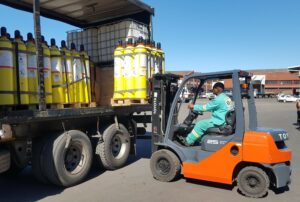
To control termites, ProFume™ is applied to tarped or sealed structures for an exposure period of 2 to 72, commonly 20-24 hours (the duration depends on fumigant and labor cost considerations and time constraints), followed by a 6 to 8 hour aeration period (UNEP 1994). It is packaged in South Africa in yellow and pink cylinders as a liquid under pressure (99.8 percent ProFume™ with no other pesticides, solvents, or additives); however, it volatilizes rapidly upon release from the cylinder. Therefore, the gas is released under its own vapor pressure through tubing directly into the structure from pressurized cylinders. The released sulfuryl fluoride is dense (3.5 times heavier than air), and will extract heat from the air as it changes from a liquid to a gas. Fans are used not only to distribute ProFume™ throughout the fumigation area, but also as heat exchangers to mix cool air near the fumigation introduction site with surrounding warmer air to prevent condensation of moisture from the air. Unlike methyl bromide, no auxiliary heat source is required (Stewart 1957).
Caution: Open Flames
As with methyl bromide, exposing sulfuryl fluoride to open flames can form acids which may react with metals, glass, ceramic tiles, or china near the heat source. Thus, prior to structural fumigation, all open flames and glowing heat filaments are turned off or disconnected (i.e., pilot lights, electric heater elements, or automatic switches) (DowElanco 1994, Derrick et al. 1990). Once the appropriate amount of ProFume™ is introduced, the fumigator closes the cylinder valve and removes the tubing from the cylinder.
Monitored Concentrations
Concentrations of ProFume™ can be monitored during fumigation using a fumiscope. Because sulfuryl fluoride is odorless and does not irritate the eyes or skin, trace amounts of a warning agent (e.g. chloropicrin, which causes irritation to the eyes, tears, discomfort, and has a noticeable disagreeable pungent odor) are typically introduced into the structure prior to fumigation to act as a warning agent (DowElanco 1994 and 1996a).
Because of a multitude of structural, environmental, and fumigation variations, no two fumigations are alike. The required dosages of ProFume™ are influenced by the temperature at the site of the pest, the length of the exposure period, containment or the rate the fumigant is lost from the structure, and the susceptibility of the pest to be controlled. As a result, dosages vary, however a typical dry wood home fumigation uses 600 – 1200 grams per hundred cubic metre. A specially designed Fumiguide™ calculator, which takes into account varying fumigation conditions (e.g., wind speed, relative humidity, tarp condition, volume in cubic metres being treated, soil type around structure, target pest, fan capacity, and exposure duration), is used to determine the required fumigant dosage. Once the fumigation is complete, the fumigator will return to the structure to conduct the aeration procedure (DowElanco 1994 and 1996a).
Aeration and re-entry
Aeration, the final step in a fumigation, requires proper ventilation and clearance of ProFume™ and the warning agent from a structure. According to the Occupational Safety and Health Administration (OSHA) permissible exposure limit (PEL) and the American Conference of Governmental Industrial Hygienists (ACGIH) threshold limit value (TLV) for ProFume™, the fumigator must aerate the structure so that the concentration of sulfuryl fluoride is 5 ppm or less prior to reentry. Reentry must be approved by trained and licensed/certified professionals (DowElanco 1996a). Because sulfuryl fluoride has a very high vapor pressure (potential to escape from an area) and a low boiling point (it is a gas at -55° C), it will quickly diffuse from high concentrations within a structure to the outside air where it rapidly dissipates to non-detectible levels (Ultraviolet radiation and reactions with solid particles in the atmosphere catalyze the breakdown of ProFume™) (DowElanco 1994).
Global Atmosphere Impact
The relatively small amounts of sulfuryl fluoride released are calculated to have virtually no impact on the global atmosphere or environment. It is broken down mainly through hydrolysis to release fluoride and sulfide ions. Because it is fully oxidized it does not interact with or contribute to local ozone formation. Furthermore, the relative contribution of sulfuryl fluoride to acid rain is infinitely small compared to massive amounts of sulfur released to the atmosphere from industry. Lastly, sulfuryl fluoride contains no chlorine or bromine and therefore does not contribute to stratospheric ozone depletion (Chambers and Millard 1995, Baily 1992).
Toxicity
Sulfuryl fluoride is a toxic gas that can be handled safely by trained professional fumigators. This gas (as well as methyl bromide) is acutely toxic to humans, although the severity of toxicological effects is dependent on the exposure concentration and exposure duration. Short-term inhalation exposure to high concentrations may cause respiratory irritation followed by pulmonary edema (an accumulation of fluid in the lungs, which can cause death), nausea, abdominal pain, central nervous system depression, and numbness in the extremities. Chronic longer-term inhalation exposure to concentrations significantly above the threshold limit value (TLV) may result in fluorosis (i.e., fluoride binding to the teeth and bones) because sulfuryl fluoride is converted to fluoride ion in the body (DowElanco 1994). Mammalian toxicity by inhalation is about equal to that of methyl bromide (Bond 1984).
Market Trends
Since inception in South Africa in 2019, ProFume™ has rapidly grown in the fumigation market. At the time of writing, sulfuryl fluoride accounts for 60% of fumigations nationally. Although originally formulated for structural fumigations, in the global quest for alternatives to methyl bromide and a remedy to phosphorine-resistance, sulfuryl fluoride has been tested and found to be an effective alternative in post-harvest storage facilities, food manufacturing plants and is accepted for ISPM15 certifications and quarantine fumigation applications for non-food cargo potentially infested with wood-infesting beetles.
Cost of Fumigating with ProFume™ vs. Methyl Bromide
Sulfuryl Fluoride application rates (and the associated fumigant costs) are determined by a number of variables that can positively or negatively affect the ability to achieve a lethal concentration. These factors include: the target pest (insect); ground temperature at structure site; structure size; the duration of the fumigation; the foundation type of the structure (slab, crawl space, basement, etc.); and whether or not the fumigation will be monitored. A fumigation performed in warmer months, on larger structures, with a slab foundation or a basement, can be more cost efficient than a comparable fumigation using methyl bromide. Monitoring sulfuryl fluoride levels to confirm lethal dose during the fumigation utilizes less chemical and is less expensive than fumigation without monitoring. The dosages are calculated on the Fumiguide electronic calculator.
Fumigant Quantity Requirements
Fumigations to eliminate drywood termites require less sulfuryl fluoride than methyl bromide. Fumigating for other insects (like powder post beetles or wood borers) would increase the amount of fumigant required for ProFume™.
Additional costs to consider when comparing sulfuryl fluoride to methyl bromide include:
1) Extended aeration times for methyl bromide which may require additional manpower and equipment costs for the fumigator. There will also be costs absorbed by the structure owner because the extended aeration period delays re-occupancy . Methyl Bromide costs for homes would include four nights hotel room rental (1 during fumigation + 3 for aeration) compared to 2 nights (1 during fumigation + 1 aeration) for ProFume™.
These costs are exponentially multiplied when applied to plant shutdowns and the associated loss of revenue in 24-hr manufacturing facilities.
2) There may be potential replacement costs for material which may react with methyl bromide to cause odor problems in fumigated structures.
Always Ready to Help
Our team has extensive experience in the industry and tackle new and complex situations regularly. We are delighted to brainstorm with our clients to find the most appropriate solution to any problem encountered. Contact us and let’s figure it out?
Tel: +27 87 012 5022
WhatsApp or Telegram: +27 64 605 7317
Email: info@fumico.co.za