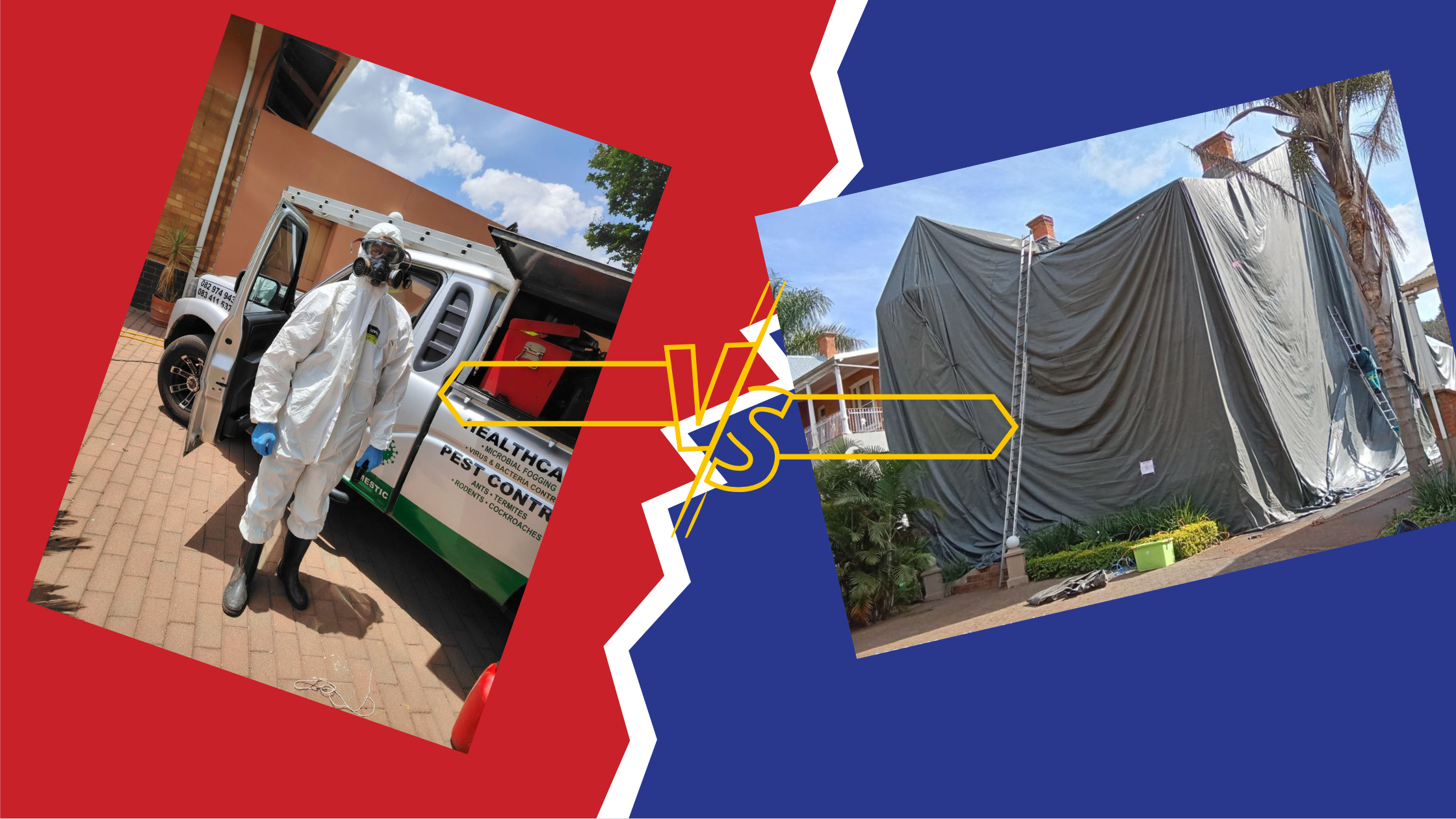
When it comes to managing unwanted pests, it’s important to understand the difference between pest control and fumigation—two distinct approaches that serve different purposes and situations. Knowing which method to use can ensure effective pest management, protect your property, and comply with industry regulations.
What is Pest Control?
Pest control refers to a broad range of methods used to prevent, manage, and eliminate pests such as insects, rodents, and other unwanted organisms. It typically involves targeted treatments applied directly to affected areas or pest habitats.
Common Pest Control Methods
- Chemical Treatments: Use of insecticides, rodenticides, and baits applied as sprays, dusts, or gels.
- Biological Control: Introducing natural predators or parasites to control pest populations.
- Physical Control: Traps, barriers, and exclusion techniques to prevent pest entry or capture pests.
- Cultural Control: Modifying the environment to reduce pest attraction and breeding (e.g., sanitation, waste management).
Ideal Applications for Pest Control
- Residential homes and gardens
- Commercial buildings and offices
- Restaurants and hospitality venues
- Warehouses and storage areas
- Outdoor pest management
Pest control is often the first line of defense and is effective for localized infestations or ongoing pest prevention.
Pest Control for Targeted Treatments

Fumigation is used for severe infestations including stored product, export controls and buildings
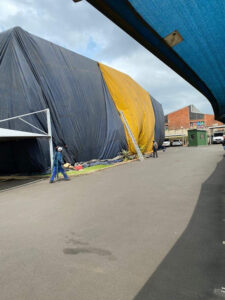
What is Fumigation?
Fumigation is a specialized pest control method that involves enclosing an area or commodity and introducing a gaseous pesticide (fumigant) to penetrate all spaces and kill pests at all life stages—eggs, larvae, pupae, and adults.
When is Fumigation Best Used?
- Export Controls: Many countries require fumigation of goods to prevent the spread of invasive pests.
- Stored Product Fumigation: Grain silos, food warehouses, and storage containers often require fumigation to protect commodities from insect infestation.
- Industrial Food Manufacturing Plants: To ensure hygienic, pest-free environments in large-scale food production.
- Building Fumigation: For severe infestations of termites, wood-boring insects, or other pests in homes and commercial structures.
Fumigation is ideal when pests are hidden in inaccessible areas or when a comprehensive, whole-structure or whole-commodity treatment is necessary.
ProFume Fumigant Gas (Sulfuryl Fluoride): A Powerful Solution
One of the most effective fumigants used today is ProFume, which contains sulfuryl fluoride gas. This colorless, odorless gas penetrates deeply into wood, soil, and enclosed spaces, making it highly effective against pests in all life stages.
Why Choose ProFume?
- Efficacy: Kills eggs, larvae, pupae, and adult pests, ensuring complete eradication.
- Penetration: Reaches pests hidden in cracks, crevices, and deep within materials.
- Non-Flammable: Safer to handle compared to some other fumigants.
- Residue-Free: Leaves no harmful residues on treated surfaces.
Pests Controlled by Sulfuryl Fluoride
ProFume is effective against a wide range of pests, including:
- Termites (subterranean and drywood)
- Wood-boring beetles and powderpost beetles
- Cockroaches
- Bed bugs
- Stored product pests such as weevils, moths, and beetles
- Rodents (in some applications, combined with other control methods)
Summary
- Pest control is a versatile, targeted approach suitable for many everyday pest problems in homes and businesses.
- Fumigation is a specialized, comprehensive treatment best for severe infestations, stored products, export requirements, and industrial settings.
- ProFume (sulfuryl fluoride) is a highly effective fumigant gas that kills all life stages of pests and is widely used in building and commodity fumigation.
Choosing the right method depends on the pest type, infestation severity, and treatment area. For expert advice and professional fumigation or pest control services, always consult licensed specialists.
Indian Meal Moth Infestation (Plodia Interpunctella)
The principal sign that you have an Indian Meal Moth Infestation is a thick blanket of silk webbing over your stored food product. This is a common pest infesting homes and grocery stores alike. The larvae are general feeders and can be found in grain products, seeds, dried fruit, dog food, and spices.
The Indian Meal moth received its common name in the United States where it was found to be a pest of meal made of “Indian corn” or maize.
Identification
The wings of these adult moths are quite distinctive with 2/3 of the lower wing a striking copper/bronze colour and the 1/3 of the wing closest to the head is off-white to greyish in colour. The wings are folded over the abdomen when at rest.
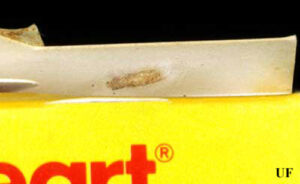
The fully grown larvae produce silk webbing and cocoons which can often be detected in the vicinity of the food commodity the larvae feed on.
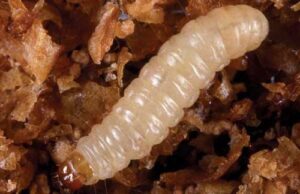
Larvae are large in size and creamy white with a brown head. The Adult life span is 10-14 days. Adults are about 13 mm in length.
Adult Indian Meal Moth

Larvae
Biology
Adult female moths lay between 200 and 400 ova (ivory coloured eggs) in or on food commodities. The larvae are creamy white with a brown head. When fully grown and mature (after 21 days) they will wander off and spin cocoons away from the infested food commodity.
The larvae pupates inside the cocoon. Adult moths emerge from the cocoons after 7 to 10 days.
Symptoms of Damage
Besides infesting all cereal food products and whole grains, larvae also feed on a wide variety of foods and feeds such as dried fruits, powdered milk, cornmeal, flour, raisins, prunes, nuts, chocolate, candies, health food and seeds, bird seed, dog and cat food, fish food, graham crackers, dried red peppers, pastas, etc. Damage is caused by the larvae spinning silken threads as they feed and crawl, thus webbing food particles together.
Control Mechanisms for Indian Meal Moth
ProFume (Sulphuryl Fluoride)
Successful fumigation of food commodities and structures infested with The Indian Meal Moth can be achieved with the precision fumigation of ProFume Gas (Sulphuryl Fluoride).
ProFume is proven effective against all life stages of a broad spectrum of stored
product pests which includes the Indian Meal Moth. ProFume does not affect the
commodity flavour, quality, colour or processing characteristics.
Your Stored Commodity Pest Guide
The warm, tropical climate of Africa is particularly conducive to stored commodity pests. The rate of insect proliferation in storage structures can be alarmingly high. In our continued effort to manage the problem effectively, we offer insight to pests we deal with throughout South Africa.
Internal and External Feeders
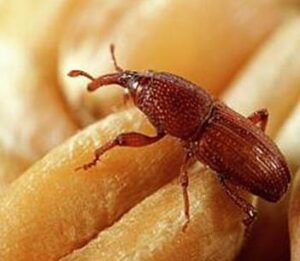
Insects that feed on and damage stored commodities such as grains and seeds can be divided into two groups. The first group of insects are INTERNAL FEEDERS. These insects spend most of their lives feeding within the kernel of grain. One example of an Internal Feeder is the Granary Weevil (Sitophilus granaries).
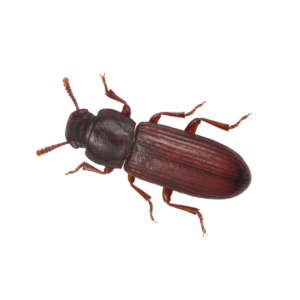
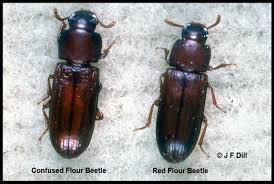
The second group of insects are EXTERNAL FEEDERS. These insects spend their lives feeding on the surface of grains and seeds or on the finished product itself, such as flour. One example of an External Feeder is The Confused Flour Beetle (Tribolium confusium) and is a major stored commodity pest problem.
Characteristics of the Confused Flour Beetle (External Feeder)
Colour – Red to dark brown in colour. Approximately 3 – 4mm in length.
Antenna – Antenna gradually thicken in size. There are 4 clubs on each antenna
Adult life span – 2 to 3 years
Amount of eggs female lays – 300 to 400 eggs in her lifetime, loosely in the food
Food – Feeds on broken grains, broken seeds, grain dust and processed food such as flour, dried fruit and spices etc.
Breeding – Breeding takes place between the temperatures of 20° Celsius and 37° Celsius. Optimum development occurs in the range of 32° Celsius and 35° Celsius
Flight – They cannot fly
External Feeder - Confused Flour Beetle
Internal Feeder - Granary Weevil
Comparing the Confused Flour Beetle and Red Beetle
Signs of pest infestation in stored commodities
Heated grain, sharp smell and large volumes of dead beetles in the commodity, causes infested commodity to go mouldy.
Managing Confused Flour Beetles
Facilities where food commodities are kept should be built in such a way that they are easy to maintain and clean. They should be well insulated, well ventilated and damp-proof. Cracks and crevices, are harbourage places for The Confused Flour Beetle, as this is where grain dust settles and should be kept to a minimum.
The facility is to be maintained and cleaned on a regular basis with management carrying out regular inspections. Stacks of commodities are to be placed in a neat orderly fashion in the warehouse, packed onto pallets. Older stock is to be used/shipped out first.
Infested commodities are to be placed in a quarantine area, away from non-infested commodities to avoid cross infestation and fumigated as soon as possible with ProFume Fumigant.
Treatment
• The facilities themselves must be treated with a residual insecticide on a regular basis. Special attention should be given to cracks and crevices, corners, walls, beams and pallets.
The residual insecticide used must be registered for use in Food Commodity Storage Facilities.
The Labels instructions are to be strictly followed at all times.
- ProFume Fumigant – Fumigate food commodities using ProFume Fumigant.
- Food Commodities are registered to be fumigated making use of ProFume Fumigant (see label).
- Fumigating with ProFume Fumigant gives the warehouse manager/mill manager the luxury of having Food Commodities effectively fumigated over a 24 hour period.
- ProFume Fumigant kills the egg to the adult stage of insects.