
The Hidden Dangers: Why Rodent Infestations are a Serious Health Risk in South Africa
Rodents are more than just a nuisance; they pose significant health risks to humans and pets alike. From contaminating food to spreading serious diseases, a rodent infestation can turn your home or business into a hazardous environment. Understanding these dangers and implementing effective preventative measures is crucial for safeguarding public health. Fumico, as a leading distributor of advanced pest management solutions like ProFume® Fumigant Gas in South Africa, is committed to providing the tools and expertise needed to protect your property from these unwelcome guests.
Direct Health Risks from Rodents
Rodents can directly transmit a variety of pathogens through their urine, feces, saliva, and bites. These diseases can range from debilitating to life-threatening:
- Hantavirus Pulmonary Syndrome (HPS): This severe respiratory disease is contracted when humans inhale aerosolized virus particles from dried rodent urine, droppings, or saliva. Initial flu-like symptoms can rapidly progress to severe respiratory distress and even death. The recent hantavirus outbreak on the MV Hondius passenger ship serves as a stark reminder of the virus’s potential to emerge in diverse environments, underscoring the universal need for stringent rodent control.
- Leptospirosis: A bacterial disease spread through contact with water or soil contaminated with infected rodent urine. Leptospirosis can cause a wide range of symptoms, including high fever, headaches, muscle aches, and vomiting, and can lead to severe kidney damage, meningitis, liver failure, and respiratory distress if left untreated.
- Salmonellosis: Rodents frequently carry Salmonella bacteria, which can be shed in their droppings. When rodents infest food preparation areas or pantries, they can contaminate food and surfaces, leading to food poisoning in humans.
- Rat-Bite Fever (RBF): As the name suggests, RBF is a bacterial infection transmitted through bites or scratches from infected rodents, or by consuming food or water contaminated with their waste. Symptoms include fever, rash, and joint pain
- Lymphocytic Choriomeningitis (LCM): Primarily associated with the common house mouse, LCM is a viral infection that can cause neurological problems in humans. Transmission occurs through contact with fresh rodent urine, droppings, saliva, or nesting materials.
Indirect Health Risks: The Role of Pests as Vectors
Beyond direct transmission, rodents also act as hosts for other pests, such as fleas and ticks, which can then transmit diseases to humans:
- Plague: Historically devastating, plague is a bacterial disease primarily transmitted to humans through the bite of infected fleas that have fed on rodents like rats. While rare in many parts of the world today, it remains a serious concern in certain regions.
- Lyme Disease: Although ticks are the direct vectors for Lyme disease, rodents, particularly mice, often serve as significant reservoir hosts for the Borrelia burgdorferi bacteria that causes the illness. A higher rodent population can contribute to an increased risk of tick-borne diseases in an area.
Fumico’s Advanced Rodent Control Solutions: Leveraging ProFume® Fumigant Gas
Effective rodent control is not merely about eliminating existing pests; it’s about implementing comprehensive strategies to prevent future infestations and protect health. Fumico, as a national distributor and training facility for ProFume® Sulfuryl Fluoride Fumigant in South Africa, empowers pest management professionals with cutting-edge solutions.
ProFume® Fumigant Gas offers a highly effective and efficient method for rodent eradication, particularly in challenging environments. Its key advantages include:
- Superior Penetration: As a gas, ProFume® can reach rodents in all life stages, even in inaccessible areas like wall voids, attics, crawl spaces, and within machinery where traditional baits and traps may fail. This ensures a thorough and complete eradication of the infestation.
- “One-and-Done” Solution: Unlike conventional methods that can be time-consuming and require multiple treatments, ProFume® provides a comprehensive solution in a single application, significantly reducing downtime for businesses and ensuring rapid control of severe infestations.
- No Residue: ProFume® leaves no surface residue, making it suitable for sensitive environments such as food handling establishments, warehouses, and other commercial or industrial sites where cleanliness and safety are paramount.
Fumico supports pest management companies across South Africa with:
- Expert Training and Support: We provide comprehensive training to ensure pest management professionals are proficient in the safe and effective application of ProFume®.
- Strategic Exclusion and Sanitation Guidance: While fumigation offers rapid eradication, we also emphasize the importance of integrated pest management, including sealing entry points and maintaining strict sanitation to prevent re-infestation.
- Advanced Monitoring Systems: We advocate for the use of modern monitoring techniques to detect early signs of rodent activity, allowing for proactive intervention.
Conclusion
Rodent infestations pose a clear and present danger to health and well-being, a challenge that is particularly relevant in South Africa’s diverse environments. From direct disease transmission to acting as vectors for other harmful pests, the risks are too significant to ignore. By understanding these dangers and leveraging advanced solutions like ProFume® Fumigant Gas, distributed and supported by Fumico, pest management professionals can ensure homes and businesses remain safe and healthy environments, free from the hidden threats of rodents. Partner with Fumico for comprehensive, cutting-edge rodent control solutions.
Replacing Deadly Pesticides in South Africa
Replace Deadly Pesticides such as Terbufos in South Africa
The tragic deaths of several school children in Soweto in October 2024 sparked a government led investigation into the cause as all children had allegedly consumed food and snacks from local Spaza tuck shops. Investigations revealed the food contained traces of the organophosphate pesticide Terbufos, commonly used in agriculture, but also widely used in townships as a cheap and readily available poison for rodent control. Can we replace deadly pesticides such as Terbufos in South Africa with alternate chemicals such as the sulfuryl fluoride fumigant, ProFume?
What is Terbufos?
Terbufos is a highly hazardous pesticide classified by the World Health Organization as a class 1a organophosphate pesticide. It was banned in the EU in 2009. In the Southern African Development Community, it is banned in Angola, the Comoros, Botswana, the Democratic Republic of Congo, Madagascar, Malawi, Mauritius, Mozambique, Namibia, Seychelles, Tanzania, Zambia and Zimbabwe. It is not banned in South Africa and is still widely used in the agricultural sector. Citrus and wine farms, maize, wheat and sugarcane plantations use Terbufos frequently.
The Toxic Effect of Terbufos
Terbufos has neurotoxic effects and is particularly dangerous to children and adolescents. The agrichemical is considered to have a higher potential to harm public health, the environment, wildlife or other crops, compared with other pesticides. Due to its extremely toxic and hazardous nature, Terbufos has been banned for use in many parts of the world.
Root Knot Nematodes
Soil treatments using alternate pesticide chemicals

The use of Terbufos in South Africa
Despite its extreme toxicity, Terbufos is widely and commonly used in the agricultural sector in South Africa. Its sale and access is highly controlled. It was classified in terms of applicable regulations as a “restricted pesticide” in 2023. Farmworkers are exposed to and vulnerable to the highly toxic pesticide as it is often used without the necessary protective gear.
In the townships, informal settlements and at taxi ranks, it is known as “halephirimi”. Translated to mean ‘you will never see the sunset’, halephirimi lives up to its promise and guarantee. It is highly toxic, lethal and fast acting. At any street corner in townships and informal settlements, one can easily find the small black bag of granulated poison. It is almost always in the translucent, unmarked, small packet used for packaging ‘amakipkip’ and other snacks loved by children. It has three main uses in townships: suicide, dogs and rats.
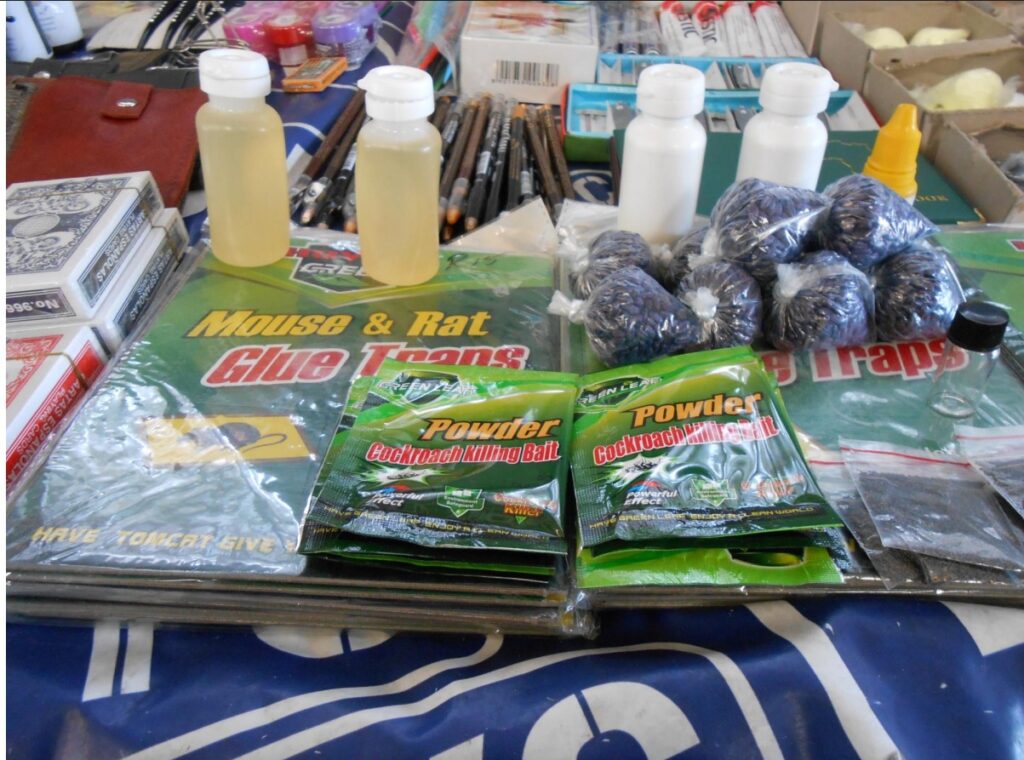
The Gauteng health department reports that halephirimi is a popular choice for those attempting suicide, particularly in the townships. Criminals, such as burglars, rub halephirimi on pieces of meat to quickly kill guard dogs. But its most common use is to kill rats which have become an endemic problem in townships. Poor waste management in several municipalities has propegated this issue. Rubbish is not collected, streets are not cleaned and rodent infestations thrive in such conditions.

Government Responses
Delivering government’s comprehensive response to the reported cases last November,Ramaphosa presented Cabinet’s decision of a three-pronged intervention strategy:
- Get hazardous pesticides off the street
- Protect children from exposure
- Prevent future outbreaks.
Last December, the African Centre for Biodiversity and a coalition of farm workers and civil society organisations petitioned Agriculture Minister John Steenhuisen and the registrar, in terms of Act 36 of 1947, “ to ban the acquisition, disposal, sale, or use in any form of the registered agricultural remedy known as Terbufos”.
In his response, Steenhuisen said: “It’s very easy for these organisations to stand on a soapbox and say,’immediately ban it’ … [but there are] broader implications for the agricultural sector, not least around food security.” T
The minister also cautioned against possible huge crop failures, pest infestations and food insecurity if the pesticide is banned without appropriate alternatives.
Can we replace deadly pesticides such as Terbufos in South Africa?
The efficacy of sulfuryl fluoride (ProFume Fumigant Gas) is well established for use in enclosed areas such as grain silos, wooden structures and containers for export. Its use in postharvest stores and distribution chains is inequivicable.
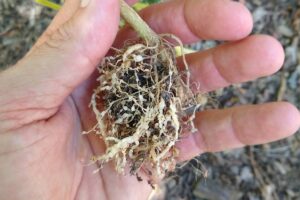
A German patent application from Bayer CropScience AG in 2003 looked at sulfuryl fluoride to be used as a soil fumigant for disinfecting soil or as a product for controlling soil-borne, plant-damaging nematodes, insects, fungi and bacteria and for controlling unwanted plant growth. Their mechanisms of treatment included injecting into the ground using stationary or mobile devices. The soil was mechanically compacted or covered during and after treatment. They also experimented with injecting the compound under a film covering the ground or by drenching the ground.
Sulfuryl fluoride was found to be surprisingly highly effective against plant pathogens. Nematodes could also be controlled including the ‘ice stage’ where the eggs remain dormant but viable under winter snows (Europe) or frost. As with other pests, the complete life cycle is addressed using sulfuryl fluoride.
Certain regions in China find the use of Sulfuryl Fluoride as a soil fumigant against root-knot nematodes and other key soil pathogens to be an economically viable alternative to methyl bromide use in similar applications.
Although the mechanism of action of SF means it is effective against rodents in confined areas such as warehouses and food stores, using it to combat the endemic problem of rat infestations in urban and township areas is not possible. Rat control requires a comprehensive management plan involving strict adherance to municipal waste management protocols.
Can Sulfuryl Fluoride replace Terbufos in the Agricultural Sector?
The results are promising that, like other countries in Africa, Terbufos can and should be banned as quickly as possible in South Africa to avoid tragic deaths. However, finding complete and viable solutions to replace its use in the agricultural sector will require additional governmental controls and legislation. Labelling SF for use in the agricultural space requires registration for such in the annals of government, and that, unfortunately, is an expensive and time consuming undertaking.