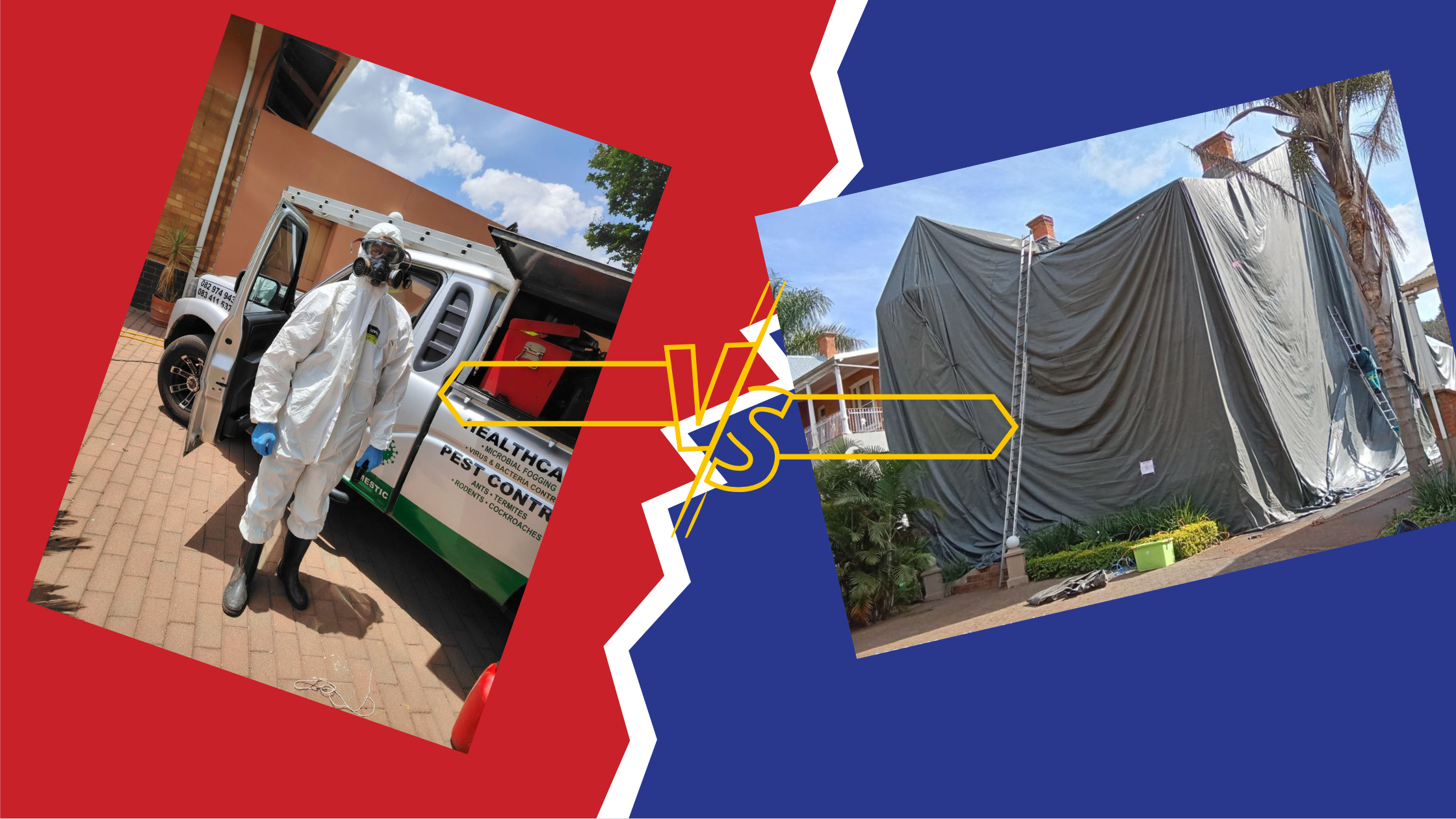
When it comes to managing unwanted pests, it’s important to understand the difference between pest control and fumigation—two distinct approaches that serve different purposes and situations. Knowing which method to use can ensure effective pest management, protect your property, and comply with industry regulations.
What is Pest Control?
Pest control refers to a broad range of methods used to prevent, manage, and eliminate pests such as insects, rodents, and other unwanted organisms. It typically involves targeted treatments applied directly to affected areas or pest habitats.
Common Pest Control Methods
- Chemical Treatments: Use of insecticides, rodenticides, and baits applied as sprays, dusts, or gels.
- Biological Control: Introducing natural predators or parasites to control pest populations.
- Physical Control: Traps, barriers, and exclusion techniques to prevent pest entry or capture pests.
- Cultural Control: Modifying the environment to reduce pest attraction and breeding (e.g., sanitation, waste management).
Ideal Applications for Pest Control
- Residential homes and gardens
- Commercial buildings and offices
- Restaurants and hospitality venues
- Warehouses and storage areas
- Outdoor pest management
Pest control is often the first line of defense and is effective for localized infestations or ongoing pest prevention.
Pest Control for Targeted Treatments

Fumigation is used for severe infestations including stored product, export controls and buildings
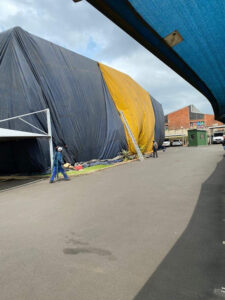
What is Fumigation?
Fumigation is a specialized pest control method that involves enclosing an area or commodity and introducing a gaseous pesticide (fumigant) to penetrate all spaces and kill pests at all life stages—eggs, larvae, pupae, and adults.
When is Fumigation Best Used?
- Export Controls: Many countries require fumigation of goods to prevent the spread of invasive pests.
- Stored Product Fumigation: Grain silos, food warehouses, and storage containers often require fumigation to protect commodities from insect infestation.
- Industrial Food Manufacturing Plants: To ensure hygienic, pest-free environments in large-scale food production.
- Building Fumigation: For severe infestations of termites, wood-boring insects, or other pests in homes and commercial structures.
Fumigation is ideal when pests are hidden in inaccessible areas or when a comprehensive, whole-structure or whole-commodity treatment is necessary.
ProFume Fumigant Gas (Sulfuryl Fluoride): A Powerful Solution
One of the most effective fumigants used today is ProFume, which contains sulfuryl fluoride gas. This colorless, odorless gas penetrates deeply into wood, soil, and enclosed spaces, making it highly effective against pests in all life stages.
Why Choose ProFume?
- Efficacy: Kills eggs, larvae, pupae, and adult pests, ensuring complete eradication.
- Penetration: Reaches pests hidden in cracks, crevices, and deep within materials.
- Non-Flammable: Safer to handle compared to some other fumigants.
- Residue-Free: Leaves no harmful residues on treated surfaces.
Pests Controlled by Sulfuryl Fluoride
ProFume is effective against a wide range of pests, including:
- Termites (subterranean and drywood)
- Wood-boring beetles and powderpost beetles
- Cockroaches
- Bed bugs
- Stored product pests such as weevils, moths, and beetles
- Rodents (in some applications, combined with other control methods)
Summary
- Pest control is a versatile, targeted approach suitable for many everyday pest problems in homes and businesses.
- Fumigation is a specialized, comprehensive treatment best for severe infestations, stored products, export requirements, and industrial settings.
- ProFume (sulfuryl fluoride) is a highly effective fumigant gas that kills all life stages of pests and is widely used in building and commodity fumigation.
Choosing the right method depends on the pest type, infestation severity, and treatment area. For expert advice and professional fumigation or pest control services, always consult licensed specialists.
Frequently Asked Questions (FAQs) About Fumigant Use in South Africa: Focus on ProFume (Sulfuryl Fluoride)
ProFume Fumigant Gas (Sulfuryl Fluoride) was introduced into South Africa in 2019 as a viable alternative to methyl bromide which is phased out in accordance to the Montreal Convention. These are the top 10 frequently asked questions (FAQs) people have about fumigant use:
 1. What is ProFume (sulfuryl fluoride) and what is it used for?
ProFume is a brand name for sulfuryl fluoride, a colorless, odorless gas used primarily for structural fumigation and pest control in South Africa. It is highly effective against termites, wood-boring insects, and a wide range of stored product pests. Douglas Products in the USA manufactures ProFume and Fumico is a selected South African distributor.
2. How does ProFume work?
ProFume penetrates deep into wood, soil, and enclosed spaces, disrupting the nervous system of pests and effectively eliminating them. Its gaseous form allows it to reach areas that are difficult to treat with other methods.
3. Is ProFume safe for humans and pets?
When applied by trained professionals following strict safety protocols, ProFume is safe. The treated area must be properly sealed during fumigation and ventilated thoroughly before re-entry. Humans and pets should not be present during treatment.
4. How long does a ProFume fumigation take?
The fumigation process typically requires 24 to 72 hours, depending on the size of the structure and pest infestation. After treatment, the area must be aerated to remove residual gas before it is safe to enter.
5. What are the environmental impacts of ProFume?
Sulfuryl fluoride is a potent greenhouse gas with a high global warming potential. Therefore, its use is carefully regulated, and fumigators take measures to minimize emissions. Despite this, it is considered a safer alternative to ozone-depleting fumigants like methyl bromide.
6. How does ProFume compare to other fumigants like phosphine or methyl bromide?
- Compared to phosphine, ProFume is non-flammable and better suited for structural fumigation with longer residual activity.
- Compared to methyl bromide, ProFume does not deplete the ozone layer but has a higher greenhouse gas potential. Methyl bromide use is largely phased out in South Africa.
7. Can ProFume be used for food storage fumigation?
ProFume is primarily used for structural fumigation. For stored product fumigation, phosphine remains the preferred fumigant in South Africa due to its effectiveness and regulatory acceptance.
8. What safety measures are taken during ProFume fumigation?
Certified fumigators use specialized equipment to monitor gas concentrations, ensure airtight sealing, and control exposure times. After fumigation, the area is ventilated thoroughly to remove residual gas before people can safely return.
9. How often should fumigation with ProFume be done?
The frequency depends on the risk of pest infestation and previous treatments. Regular inspections by pest control professionals help determine when fumigation is necessary.
10. Where can I find professional fumigation services using ProFume in South Africa?
Look for licensed and certified fumigation companies experienced in ProFume application. Always verify credentials and ask about safety and environmental practices. Fumico offers complimentary stewardship training for professional pest control companies.
Sulfuryl Fluoride vs. Methyl Bromide: A Comparison for South African Fumigation
Fumigation plays a crucial role in protecting South Africa’s agricultural products, stored goods, and infrastructure from pest damage. Among the fumigants historically and currently used, sulfuryl fluoride and methyl bromide stand out for their effectiveness. However, their use involves important differences in safety, environmental impact, and regulation. This article explores these two fumigants to help industry professionals and stakeholders understand their roles in South Africa’s pest control landscape.
What Are Sulfuryl Fluoride and Methyl Bromide?
- Sulfuryl Fluoride (SO2F2) is a colorless, odorless gas widely used for structural fumigation and commodity protection. It is effective against termites, wood-boring insects, and a broad range of stored product pests.
- Methyl Bromide (CH3Br) is a highly effective broad-spectrum fumigant historically used for soil fumigation, quarantine treatments, and commodity protection. It is a colorless gas with a faint sweet odor.
Efficacy and Application
- Sulfuryl Fluoride excels in structural fumigation due to its excellent penetration and residual activity. It is increasingly used as a replacement for methyl bromide in many applications, especially for termite control and wood preservation.
- Methyl Bromide has been valued for its rapid action and broad pest control spectrum, including soil-borne pests and nematodes. It was widely used in agriculture and quarantine treatments.
Environmental and Health Considerations
- Sulfuryl Fluoride is non-flammable and has relatively low acute toxicity to humans when used properly. However, it is a potent greenhouse gas with a high global warming potential, necessitating careful handling and containment.
- Methyl Bromide is highly toxic and an ozone-depleting substance. Due to its significant environmental impact, its use has been phased out or heavily restricted globally under the Montreal Protocol, including in South Africa.
Regulatory Status in South Africa
- Sulfuryl Fluoride is registered and increasingly adopted for structural fumigation and certain commodity treatments. Its use is regulated to ensure safety and environmental protection.
- Methyl Bromide use is largely phased out in South Africa except for critical quarantine and pre-shipment uses under strict controls. Alternatives are encouraged to reduce environmental harm.
Safety and Handling
- Both fumigants require trained professionals for safe application, including proper sealing, ventilation, and personal protective equipment.
- Sulfuryl Fluoride requires longer exposure times and airtight conditions but is less hazardous to applicators when protocols are followed.
- Methyl Bromide is acutely toxic and requires stringent safety measures to prevent exposure.
Cost and Practicality
- Sulfuryl Fluoride tends to be more expensive and requires specialized equipment but offers a safer environmental profile compared to methyl bromide.
- Methyl Bromide was cost-effective and fast-acting but its environmental costs and regulatory restrictions limit its practicality today.
Conclusion: Moving Towards Sustainable Fumigation
South Africa’s fumigation industry is transitioning away from methyl bromide due to its environmental impact and regulatory phase-out. Sulfuryl fluoride offers an effective alternative for many fumigation needs, especially structural treatments. However, its greenhouse gas potential means that integrated pest management and alternative methods should also be considered to minimize environmental footprint.
For fumigation professionals, understanding the strengths and limitations of these fumigants is essential for safe, effective, and responsible pest control.
Replacing Deadly Pesticides in South Africa
Replace Deadly Pesticides such as Terbufos in South Africa
The tragic deaths of several school children in Soweto in October 2024 sparked a government led investigation into the cause as all children had allegedly consumed food and snacks from local Spaza tuck shops. Investigations revealed the food contained traces of the organophosphate pesticide Terbufos, commonly used in agriculture, but also widely used in townships as a cheap and readily available poison for rodent control. Can we replace deadly pesticides such as Terbufos in South Africa with alternate chemicals such as the sulfuryl fluoride fumigant, ProFume?
What is Terbufos?
Terbufos is a highly hazardous pesticide classified by the World Health Organization as a class 1a organophosphate pesticide. It was banned in the EU in 2009. In the Southern African Development Community, it is banned in Angola, the Comoros, Botswana, the Democratic Republic of Congo, Madagascar, Malawi, Mauritius, Mozambique, Namibia, Seychelles, Tanzania, Zambia and Zimbabwe. It is not banned in South Africa and is still widely used in the agricultural sector. Citrus and wine farms, maize, wheat and sugarcane plantations use Terbufos frequently.
The Toxic Effect of Terbufos
Terbufos has neurotoxic effects and is particularly dangerous to children and adolescents. The agrichemical is considered to have a higher potential to harm public health, the environment, wildlife or other crops, compared with other pesticides. Due to its extremely toxic and hazardous nature, Terbufos has been banned for use in many parts of the world.
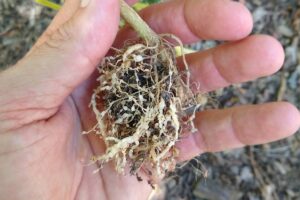
Root Knot Nematodes
Soil treatments using alternate pesticide chemicals

The use of Terbufos in South Africa
Despite its extreme toxicity, Terbufos is widely and commonly used in the agricultural sector in South Africa. Its sale and access is highly controlled. It was classified in terms of applicable regulations as a “restricted pesticide” in 2023. Farmworkers are exposed to and vulnerable to the highly toxic pesticide as it is often used without the necessary protective gear.
In the townships, informal settlements and at taxi ranks, it is known as “halephirimi”. Translated to mean ‘you will never see the sunset’, halephirimi lives up to its promise and guarantee. It is highly toxic, lethal and fast acting. At any street corner in townships and informal settlements, one can easily find the small black bag of granulated poison. It is almost always in the translucent, unmarked, small packet used for packaging ‘amakipkip’ and other snacks loved by children. It has three main uses in townships: suicide, dogs and rats.
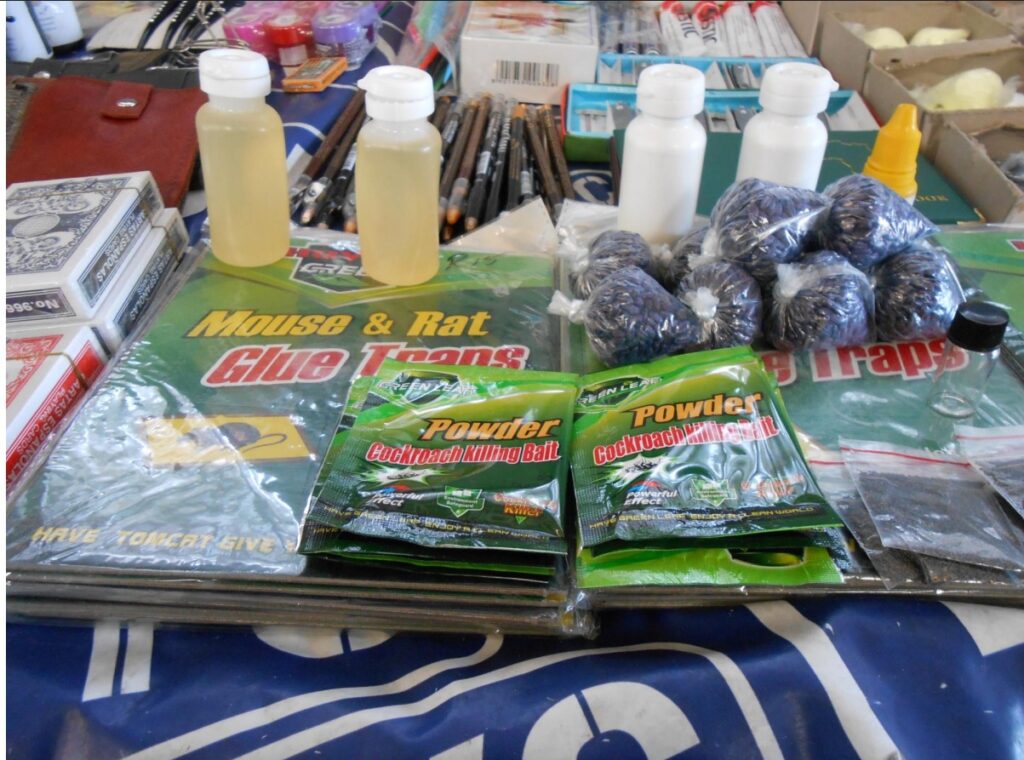
The Gauteng health department reports that halephirimi is a popular choice for those attempting suicide, particularly in the townships. Criminals, such as burglars, rub halephirimi on pieces of meat to quickly kill guard dogs. But its most common use is to kill rats which have become an endemic problem in townships. Poor waste management in several municipalities has propegated this issue. Rubbish is not collected, streets are not cleaned and rodent infestations thrive in such conditions.

Government Responses
Delivering government’s comprehensive response to the reported cases last November,Ramaphosa presented Cabinet’s decision of a three-pronged intervention strategy:
- Get hazardous pesticides off the street
- Protect children from exposure
- Prevent future outbreaks.
Last December, the African Centre for Biodiversity and a coalition of farm workers and civil society organisations petitioned Agriculture Minister John Steenhuisen and the registrar, in terms of Act 36 of 1947, “ to ban the acquisition, disposal, sale, or use in any form of the registered agricultural remedy known as Terbufos”.
In his response, Steenhuisen said: “It’s very easy for these organisations to stand on a soapbox and say,’immediately ban it’ … [but there are] broader implications for the agricultural sector, not least around food security.” T
The minister also cautioned against possible huge crop failures, pest infestations and food insecurity if the pesticide is banned without appropriate alternatives.
Can we replace deadly pesticides such as Terbufos in South Africa?
The efficacy of sulfuryl fluoride (ProFume Fumigant Gas) is well established for use in enclosed areas such as grain silos, wooden structures and containers for export. Its use in postharvest stores and distribution chains is inequivicable.
A German patent application from Bayer CropScience AG in 2003 looked at sulfuryl fluoride to be used as a soil fumigant for disinfecting soil or as a product for controlling soil-borne, plant-damaging nematodes, insects, fungi and bacteria and for controlling unwanted plant growth. Their mechanisms of treatment included injecting into the ground using stationary or mobile devices. The soil was mechanically compacted or covered during and after treatment. They also experimented with injecting the compound under a film covering the ground or by drenching the ground.
Sulfuryl fluoride was found to be surprisingly highly effective against plant pathogens. Nematodes could also be controlled including the ‘ice stage’ where the eggs remain dormant but viable under winter snows (Europe) or frost. As with other pests, the complete life cycle is addressed using sulfuryl fluoride.
Certain regions in China find the use of Sulfuryl Fluoride as a soil fumigant against root-knot nematodes and other key soil pathogens to be an economically viable alternative to methyl bromide use in similar applications.
Although the mechanism of action of SF means it is effective against rodents in confined areas such as warehouses and food stores, using it to combat the endemic problem of rat infestations in urban and township areas is not possible. Rat control requires a comprehensive management plan involving strict adherance to municipal waste management protocols.
Can Sulfuryl Fluoride replace Terbufos in the Agricultural Sector?
The results are promising that, like other countries in Africa, Terbufos can and should be banned as quickly as possible in South Africa to avoid tragic deaths. However, finding complete and viable solutions to replace its use in the agricultural sector will require additional governmental controls and legislation. Labelling SF for use in the agricultural space requires registration for such in the annals of government, and that, unfortunately, is an expensive and time consuming undertaking.
Fumigation South Africa
Fumigation is a pest control method that uses gas or smoke to eliminate pests in homes and businesses in South Africa. It’s often used when other methods aren’t effective or when multiple species of pests need to be treated. Fumigation in South Africa includes chemical fumigants such as phosphine, methyl bromide and sulfuryl fluoride.
How it works
A sealed area is filled with a fumigant gas at a lethal concentration. The gas kills all insects and pests in the area.
Who can fumigate?
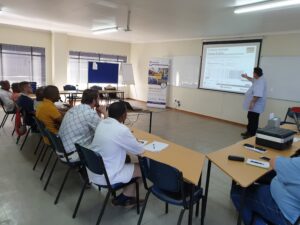
Fumigation should be done by an experienced, reputable pest control company. Certification to use lethal chemicals requires stewardship training in both theoretical and practical application.
Read more about our free stewardship training here…
When is fumigation used in South Africa?
- For widespread infestations,
- To target multiple species of pests at once,
- To treat stored products like grains and food produce,
- To treat wood-destroying organisms, and
- To treat containers for export.
Stewardship Training
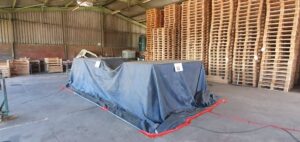
Fumigation for export
Specialized fumigation companies.
Many pest control companies specialise in a particular aspect of fumigation such as:
- Woodborer treatments in historical buildings or museums containing artefacts.
- Fumigation services for businesses in logistics and shipping including ISPM 15 certification for cargo and commodities for export.
- Fumigation for residential homes or business buildings.
- Grain silos and other storage facilities.
Other fumigation considerations
The price of fumigation depends on the volume of goods, preparation needed and the gas used. Sulfuryl fluoride fumigant gas is more expensive than its predessesor methyl bromide, for example, but less volume is needed for structural fumigations. This equates to a 60% saving for the client.
Certain pests may have built resistance to a particular fumigant, so an alternate works best. Phosphine resistance has been combatted with the advent of sulfuryl fluoride fumigant gas.
It is important to remove certain items before fumigation such as unsealed food, medication, plants and, of course, all animals including fish in tanks.
Sulfuryl Fluoride
Everything you need to know about Sulfuryl Fluoride
Dow Chemical developed sulfuryl fluoride in the 1950’s to control drywood termites. It was then registered as an insecticide and rodenticide in 1959. This is everything you need to know about sulfuryl fluoride, sold in South Africa under the brand name ProFume® Fumigant Gas.
Sulfuryl fluoride is an odourless gas which is both nonflammable and non explodable. It is stable to store in a steel cylinder for up to 6 years. Although the chemical is in a gas state at atmospheric pressure, it is sold as a pressurized liquefied gas. This is everything you need to know about sulfuryl fluoride.
Background of sulfuryl fluoride fumigant gas
The Dow Chemical Company developed sulfuryl fluoride as a structural fumigant and marketed it as Vikane® in 1961. More than 3 million priceless structures such as cathedrals, historical landmarks and rare-book libraries as well as scientific and medical research laboratories containing highly sensitive electronic equipment have been successfully fumigated with sulfuryl fluoride.
Structure-infesting pests cause costly damage to older homes in warmer climates. Extensive damage from termites and wood-boring beetles may occur before the pests are even noted. Although South Africa’s brick and mortar homes may not collapse as a timber-built home in Florida, USA could, roof trusses, hardwood flooring, wooden bannisters, window frames and of course cupboards and furnishings are at risk to termites and woodborer in warm, humid zones such as Durban, KZN.
Tented fumigation using sulfuryl fluoride has thus far shown 100% efficacy through all life phases of these notorious, hard to reach pests. Cockroaches, rodents and bed-bugs are also eliminated with sulfuryl fluoride treatment.
Postharvest breakthrough with sulfuryl fluoride in 1990’s
Postharvest losses in the United States was estimated at $5 billion per year (Pimental 1991). Insects that infested grains, dried fruits and tree nuts in mills, warehouses and food storage facilities meant product losses. Traditionally, methyl bromide was used to combat postharvest pests but the ozone depleting character of methyl bromide required an alternate solution (per the Montreal Protocol).
In 1995, Dow AgroSciences formed partnerships with leading stored product researchers, fumigators and food industries around the world to evaluate and develop sulfuryl fluoride as a postharvest fumigant. It has proven an effective treatment for all life stages of pest in the postharvest sphere, including phosphine-resistant pests.
Sulfuryl fluoride in South Africa
Fumico is one of two licensed distributors of sulfuryl fluoride in South Africa. It is manufactured and sold under the brand name ProFume® Fumigant Gas. The first fumigation using ProFume was undertaken by us on 8 April 2019
Sulfuryl Fluoride Fumigant Gas
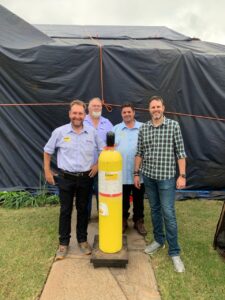
Practical Fumigation with Sulfuryl Fluoride

Uses of Sulfuryl Fluoride
Sulfuryl fluoride is introduced into structures as a gas which fills all air spaces in the enclosed area and penetrate cracks, crevices and pores in the wood. The gas penetrates materials quickly and rapidly but dissipates during the ventilation process. It has been widely used as a fumigant to kill both the eggs and adults of insects such as cockroaches, termites, beetles, moths and flies after exposure of 16–22 hours with a concentration range from 0.5 to 3.5 and 5–77 g m−3 for LD95 for adults and eggs, respectively. Sufuryl fluoride is also used (successfully) on postembryonic forms of fleas, rodents, ants, bees, wasps, spiders, millipedes, bedbugs, silverfish, springtails, earwigs, fire- brats, book lice, and brown dog ticks.
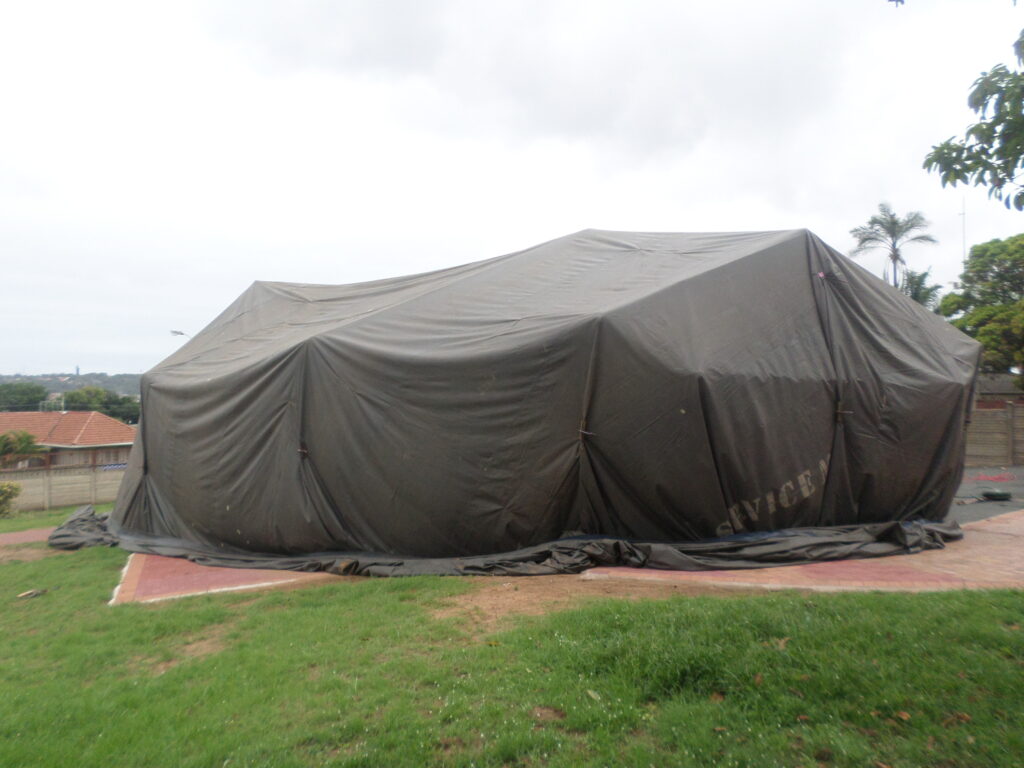
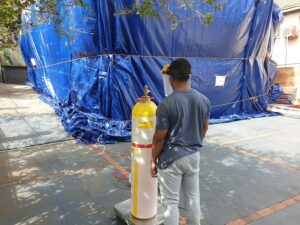
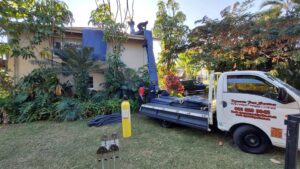
It is crucial to contain sulfuryl fluoride for a sufficient period of time so tenting is used around the structure during fumigation. Any opening is sealed (door frames, window frames, key locks or drainage pipes for example) using a specialized ‘Pink Tape‘. Traditional masking tapes or duct tape are too porous to contain sulfuryl fluoride molecules.
Mechanism of action of sulfuryl fluoride on pest infestations
Sulfuryl fluoride has a complex mode of action. It is thought to be toxic primarily through the action of the fluoride ion which it contains. It inhibits oxygen uptake, disturbs the normal phosphate balance, and inhibits hydrolysis (breakdown) of fatty acids. The fluoride ion in sulfuryl fluoride is thought to bind to calcium (leading to spasms and seizures) as well as potassium and magnesium. Enzymes which require a magnesium ion for their normal function are inhibited by sulfuryl fluoride; these enzymes include enolases (used to metabolize sugar) and ATPase, an enzyme that is important in cellular energy metabolism. The end result is that sulfuryl fluoride prevents stored fats from being utilized, and there is insufficient energy for survival.
You can read more about the chemical action and interactions of sulfuryl fluoride here: Fact Sheet from the Journal of Pesticide Reform
Toxicity management of sulfuryl fluoride
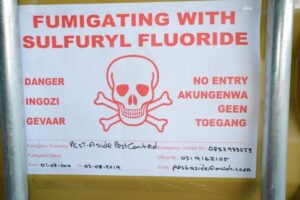
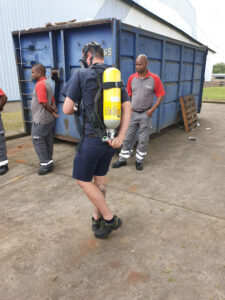
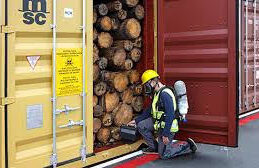
Sulfuryl fluoride is “an extremely hazardous gas.” The most straightforward demonstration of its acute toxicity are the classifications and restrictions placed on itsuse by the U.S. Environmental Protection Agency (EPA). EPA classifies sulfuryl fluoride as a restricted use pesticide. This means that the pesticide must be used by or under the supervision of a certified applicator who is wearing protective clothing. Sulfuryl fluoride is also labeled with the signal word “Danger” by EPA, meaning that it is in the most acutely toxic category of pesticides. Because of sulfuryl fluoride’s acute toxicity, all entrances to the fumigated areas must be posted with a skull and crossbones sign. No one is permitted in the treated area without self-contained breathing apparatus until it has been thoroughly ventilated according to approved procedures and concentrations of sulfuryl fluoride have been measured at less than 5 parts per million.
Efficacy of sulfuryl fluoride in South Africa
Since implementing sulfuryl fluoride in South Africa, we have had a 100% success rate in treating all life stages of pest and has even proven effective against phosphine resistant pests. We estimate over 60% of all fumigations are now undertaken with sulfuryl fluoride. Structural fumigation using sulfuryl fluoride is most cost effective as the quantity of gas required is significantly reduced. Read more When Pesticides No Longer Work
A global search for alternate fumigants for export markets
As methyl bromide is phased out globally, alternatives such as phosphine (PH3), ethyl formate (EF) used in quarantine procedures and ethanedinitrile (EDN) have been introduced in various global markets. Each alternative has distinct disadvantages though:
- EF has a high sorption rate and lower permeability because of its lower vapor pressure compared with other fumigants
- Phospine requires a longer fumigation time than MB or EDN and certain pests have become resistant to it.
- EDN is expensive, costing more than twice that of MB, without a significant difference in the treatment efficacy or convenience of use
ProFume Sulfuryl fluoride, however, has shown tangible efficacy in controlled studies such as this one:
The future of sulfuryl fluoride in South Africa
Aligned to the global trend to find more environmentally friendly fumigants, sulfuryl fluoride shows robust promise to replace methyl bromide for all structural fumigations and most postharvest pest management and ISPM15 export requirements.
To date, the efficacy of sulfuryl fluoride is 100% against all life stages of pest. Since it is effective against phosphine resistant pests, its use is warranted in postharvest applications where phosphine may have dominated a decade ago.
Structural fumigation with sulfuryl fluoride is definitively more cost effective than methyl bromide due to its sorption and penetration results. Postharvest use of sulfuryl fluoride is more expensive than methyl bromide, but its effectiveness offers a degree of quality assurance beyond MB.
As more global markets test and accept sulfuryl fluoride results in ISPM15 commodities, the use of sulfuryl fluoride in export markets will exponentially rise.
Within the food manufacturing industry where senstive electrical equipment forms part of automated manufacturing processes, sulfuryl fluoride is essential. Not only is it able to penetrate into the deep recesses of machinary, it does no damage to electrical components and will not effect the taste, colour or aroma of the product.
The use of sulfuryl fluoride is set to increase globally and in South Africa in the forseeable future.
When should fumigation be done?
When should fumigation be done?
Fumigation is a method of pest control or the removal of harmful microorganisms by completely filling an area with gaseous pesticides (or fumigants) to suffocate or poison the pests within. It is used to control pests in buildings, soil, grain, and produce. So when should fumigation be done?
Fumigation for the property owner
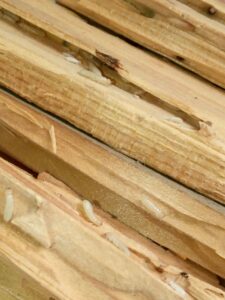
General nuisance pests are usually treated with pest spray products. Fumigation is required for woodboring insects in wooden structures such as termites and beetles. Historic buildings, such as the iconic Playhouse Theater in Durban, tend to attract woodboring pests because of the expanse of timber used in the structure. American homes have more timber than South African homes which are brick and mortar based. Older homes with wooden window frames, hardwood flooring and wooden staircases are commonly susceptible to woodborer but even modern buildings with wooden roof trusses may be at risk too.

Woodborer Insects
Stored Grain Pests
Signs of woodborer that you may need to fumigate your property
- Look for small, round exit holes (typically 1-2 mm in diameter) on the surface of the wood. These holes are often surrounded by fine wood dust or frass.
- Pay attention to any signs of weakened or crumbling wood, especially if it appears honeycombed or has a powdery texture.
- If you notice adult beetles emerging from the wood or find their discarded wings nearby, it’s a clear indication of an infestation.
- Regular inspections, especially in areas prone to woodborer activity, can help you detect and address the issue early. This will minimize potential damage. Read more Signs of a Woodborer Infestation and What you can do About It
Stored Product Pests
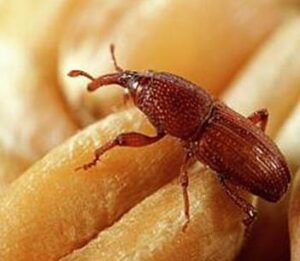
Food products are prone to insect infestations such as beetles, moths, mites, and weevils. Controlling stored product pests is challenging as the entire life cycle of the pest (egg, larva/ nymph, pupa and adult) must be addressed. The eggs are resistant to chemical action. The eggs could hatch a few days or weeks after treatment and the client is faced with a continued pest issue. Sulfuryl Fluoride (ProFume Fumigant Gas) has proved 100% effective through all life stages of pest.
Stored product for animal or human consumption can have no remaining toxic residues. Fumigant gases such as ProFume SUFFOCATE the pest on site and the gas dissipates rapidly thereafter.
Signs of Stored Product Pest Infestation
- Small holes, tears and other damage to packaging
- Dust and spillage outside of storage packaging or containers
- Webbing or larvae found on the outside of bags, bins, boxes or packets
- Larvae, pupae or webbing found on sills, shelving, machinery, beams, on or near storage and in and around spillage
- Pests crawling over counters and floors
- Insects found in other pest traps, such as rodent or fly traps
- Insects found inside stored food items
- WARMTH. Elevated grain temperature indicates pest infestation.
- SOUNDS. Ultrasound devices can be used to detect pests within a grain store.
Container fumigation for infested wooden furniture, artefacts and textiles
Export regulations (ISPM15) require container fumigation of goods that may harbor pests. The brown marmorated stink bug, for example, would decimate a country’s fruit and vegetable crops if introduced to an area without natural predators to oppose the pest. Similarly, wooden logs shipped with woodborer beetles pose a risk to the destination port.
Deep-seated infestation in machinery on your premises
Food manufacturers usually run operations 24/7 and any shut-down has costly consequences. ProFume Fumigant Gas has proved an effective treatment within the industry. Since the gas is non-corrosive, fast acting and targets ALL life stages of pest, ProFume is ideal to target the hard to reach areas within the machinary and factory shut-down is minimized.
COP28 UAE
28th Conference of the Parties (COP28) in UAE
COP28 Presidency put food systems transformation on the global climate agenda
The COP28 Presidency put food systems transformation on the global climate agenda as more than 130 world leaders met at the 28th such summit held in Dubai, UAE this week.
A range of initiatives supporting food and climate action were announced during the first thematic session of the World Climate Action Summit. The event was featured by Giorgia Meloni, Prime Minister of Italy, Fiamē Naomi Mataʻafa, Prime Minister of Samoa, Samia Suluhu Hassan, andJoko Widodo, President of Indonesia and Anthony J. Blinken, Secretary of State for the United States of America.
More than $2.5 billion has been mobilized by the global community to support the food-climate agenda. H.E. Mariam bint Mohammed Almheiri, UAE Minister of Climate Change and Environment and COP28 Food Systems Lead announced this during the session.
Over 130 countries – representing over 5.7 billion people, 70 per cent of the food we eat, nearly 500 million farmers and 76 percent of total emissions from the global food system – have signed up to the leaders-level ‘COP28 UAE Declaration on Sustainable Agriculture, Resilient Food Systems, and Climate Action.’
The UAE and the Bill & Melinda Gates Foundation launched a $200 million partnership for Food Systems, Agriculture Innovation and Climate Action. This is focused on agricultural research, scaling agricultural innovations and funding technical assistance for implementing the Declaration.
Addressing both global emissions and protecting the lives and livelihoods of farmers living on the frontline of climate change are core elements of the COP28 Food Systems Agenda.
COP28 UAE

COP28 UAE Presidency puts food systems transformation on Global Climate Agenda

Dubai, 1 December 2023
Landmark agriculture, food and climate action declaration
The COP28 Presidency today announced that 134 world leaders have signed up to its landmark agriculture, food and climate action declaration. The mobilization of more than USD$2.5 billion in funding to support food security while combatting climate change was also announced. This is a new partnership between the UAE and the Bill and Melinda Gates Foundation for food systems innovation in the fact of climate change.
The ‘COP28 UAE Declaration on Sustainable Agriculture, Resilient Food Systems, and Climate Action’ (the Declaration) was announced at a special session of the World Climate Action Summit (WCAS). This was led by Joko Widodo, President of Indonesia Giorgia Meloni, Prime Minister of Italy, Fiamē Naomi Mataʻafa, Prime Minister of Samoa and Anthony J. Blinken, Secretary of State for the United States of America. The Declaration addresses both global emissions while protecting the lives and livelihoods of farmers who live on the frontlines of climate change.
Food systems and agriculture have marked impact on climate
“There is no path to achieving the goals of the Paris Climate Agreement and keeping 1.5C within reach, that does not urgently address the interactions between food systems, agriculture, and climate. ”
– H.E. Mariam bint Mohammed Almheiri, UAE Minister of Climate Change and Environment and COP28 Food Systems Lead.
“Countries must put food systems and agriculture at the heart of their climate ambitions. This addresses both global emissions and protecting the lives and livelihoods of farmers living on the front line of climate change. Today’s commitment from countries around the world will help to build a global food system fit for the future,” she added.
The 134 signatory countries to the Declaration are home to over 5.7 billion people and almost 500 million farmers, produce 70 percent of the food we eat, and are responsible for 76 percent all emissions from global food systems or 25 percent of total emissions globally.
Address hunger and climate change simultaneously
Endorsement of the Declaration will help in strengthening food systems, building resilience to climate change, reducing global emissions, and contributing to the global fight against hunger, aligned with the UN Sustainable Development Goals (SDGs). The Declaration – the first of its kind for the COP process – stresses the need for common action on climate change, which adversely affects a large portion of the world’s population, particularly those living in vulnerable countries and communities.
“Today signals a turning point, embedding sustainable agriculture and food systems as critical components in both dealing with climate change and building food systems fit for the future. Together we will deliver lasting change for families, farmers and the future,” said H.E Almheiri.
One third of greenhouse emmissions linked to food supply
While food systems are vital for meeting societal needs and enabling adaptation to climate impacts, they are also responsible for as much as a third of global greenhouse gas emissions. Many smallholder farmers in low- and middle-income countries are also facing heightened vulnerability to climate change.
Key announcements made at the session today include:
- The UAE and the Bill & Melinda Gates Foundation launched a USD$200 million partnership for Food Systems, Agriculture Innovation and Climate Action, focused on agricultural research, scaling agricultural innovations and funding technical assistance for implementing the Declaration.
- The UAE is joining the CGIAR, a global partnership that unites international organizations engaged in research about food security, resilience, and climate adaptation.
- COP28 and a group of partners announced a collaborative effort to offer countries quality technical cooperation and to help deliver on the objectives of the Declaration. The partners behind the Technical Cooperation Collaborative pledged more than USD$200 million in new and newly aligned support, while also committing to increase coordination across their wider portfolios.
- COP28 UAE, together with the World Business Council on Sustainable Development (WBCSD) and the Boston Consulting Group (BCG), supported by the UN Climate Change High-Level Champions, launched the Action Agenda on Regenerative Landscapes. This will see leading food and agriculture organizations join forces to scale regenerative agriculture, transitioning 160 million hectares to regenerative agriculture by 2030, accompanied by USD$2.2 billion in future investment, and engaging 3.6 million farmers world-wide.
- The High-Level Champions, in collaboration with non-government actors including farmers, Indigenous Peoples, consumers, cities, youth, businesses, financial institutions, philanthropies and others, launched a Call to Action for Transforming Food Systems for People, Nature, and Climate, in support of the Declaration and to highlight the urgent need to take action on food systems by all actors.
The COP28 Food Systems and Agriculture Agenda has four pillars, covering national leadership, non-state actors, scaling up innovation, and finance.
COP28 is also working with representatives from every stage of the food system and agriculture value chain, including farmers, civil society, businesses, and local governments to accelerate the transition to regenerative agriculture.
The full list of countries who have signed the Declaration can be found here.
What this could mean for fumigators in South Africa
Since the Montreal Protocol of 2004, countries have been encouraged to switch fumigation products for lower ozone depletion. South Africa took the decision to phase out Methyl Bromide by March 2015. An advantage of phasing out methyl bromide is a reduced risk contribution to the depletion of the ozone layer. You can read more about this in this article: Methyl bromide ban holds significant challenges for food industry
After a scramble by South African fumigators to find an alternative fumigant to methyl bromide, sulfuryl fluoride (brand name ProFume gas fumigant) was introduced to South Africa in 2019.
Sulfuryl Fluoride is practically non-reactive in the atmosphere. So, it is not expected to destroy ozone. Sulfuryl fluoride has replaced many uses of methyl bromide. Methyl bromide is classified as a “Class I Ozone Depleting Substance” by the EPA. This would indicate that expanded use of ProFume fumigant gas could contribute to COP28’s indicated goal for food systems transformation on climate agenda.