Pests Imported to South Africa
Our global economy has opened trade between many diverse countries across continents. Unfortuntely, commodity exchanges have also resulted in pest imports too. Pests that have been imported to South Africa include the wheat curl mite, the fall army worm and the oriental fruit fly. These pests can have serious consequences for agriculture, the economy and biodiversity.
Examples of imported pests to South Africa
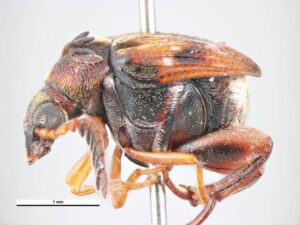
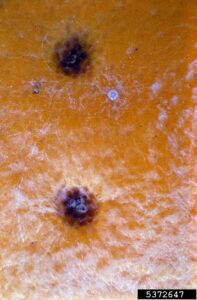
Studies have identified several prevalent intercepted pests like Callosobruchus species of beetle which attack legumes. Dysmicoccus brevipes known as the mealybug and Phyllosticta citricarpa commonly named citrus black spot.
Callosbruchus Species
Citrus Black Spot
Potential impact of imported pests to South Africa
The illegal importation of plant commodities can introduce pests that can have negative impacts on South Africa’s agriculture, economy and biodiversity. A pest without a natural predator to contain it’s spread, can quickly dessimate flora and fauna in a new territory.
High risk commodities:
Fresh fruits are the most common source of imported pests, followed by grains and vegetables.
Prevention and control
South Africa’s Plant Health (Phytosanitary) Policy aims to prevent the introduction of quarantine pests. The policy also aims to control and mitigate the spread of pests.
Possible pest threats
These pests are currently controlled, but could pose a threat in South Africa.
Wheat curl mite (Aceria tosichella)
This is a tiny, white mite that can causes wheat yield losses but also transmits viruses such as the wheat streak mosaic virus whish is a destructive wheat disease. This mite has caused extensive damage in many parts of the world and could be introduced through maize, live plant and seed imports. Read more “Alien pest to wheat and maize could pose a threat to South Africa.”
Fall army worm
A migratory pest that can cause serious damage to maize crops. It has been detected in several provinces in South Africa.
Oriental fruit fly
A pest that has not yet established itself in certain parts of South Africa.
Related research
Research on imported pests in South Africa indicates that fresh fruits are the primary source of intercepted pests, with the most commonly identified pests including the Callosobruchus rhodesianus, Dysmicoccus brevipes, Callosobruchus maculates, and Phyllosticta citricarpa, highlighting the need for stricter border controls and phytosanitary policies to prevent the introduction of new invasive species that could harm South African agriculture and biodiversity.
Pest Fumigation Trends 2024
Emerging Pest Control Trends in 2024
Consumer Requirements
In an ever-evolving industry, staying abreast with the emerging fumigation pest control trends of 2024 is essential. Global researchers have identified distinct changes within the consumer focus. Offering products and services to alighn with these changes will future-proof you business in 2024 and beyond.
Provide Eco-friendly Solutions
Consumers are developing an increasing interest in eco-friendly solutions to reduce their carbon footprint on the planet. There is a growing need for pest control companies to provide a ‘green’ alternative to toxic chemical use and/or ozone depleting fumigants.
Statistically, 92% of homeowners are actively searching for more sustainable solutions to their challenges.
Environmentally Conscious Alternatives you may offer
-
Integrated Pest Management
IPM (i.e. integrated pest management) is an effective, environmentally conscious approach to pest control that relies on a combination of common sense practices.
IPM is not a single pest control method but a series of pest management evaluations, decisions and controls. In practicing IPM, consumers who are aware of the potential for pest infestation will follow a four-tiered approach. The four steps include:
Grow with the industry trends of 2024

Eco-friendly solutions take precedence
Set Action Thresholds
Before taking any pest control action, IPM first sets an action threshold; a point at which pest populations or environmental conditions indicate that pest control action must be taken. Sighting a single pest does not always mean control is needed. The level at which pests will become an economic threat is critical to guide future pest control decisions.
Monitor and Identify Pests
Not all insects, weeds, and other living organisms require control. Many organisms are innocuous. Some are even beneficial. IPM programs work to monitor for pests and identify them accurately so appropriate control decisions can be made. This is done in conjunction with action thresholds.
When pests are monitored and identified appropriately, pesticides will not be used unneccesarily. This also mitigates the use of the wrong pesticide.
Prevention
As a first line of pest control, IPM programs work to manage the crop, lawn, or storage space to prevent pests from becoming a threat. In an agricultural crop, this may include cultural methods. Rotate between different crops, select pest-resistant varieties and plant pest-free rootstock. These control methods can be very effective and cost-efficient and present little to no risk to people or the environment.
Control
If all the above steps prove insufficient, IPM programs will evaluate the proper control method for effectiveness and risk. The most effective and least risky pest controls are chosen first. Highly targeted chemicals, (such as ProFume fumigant gas), pheromones which disrupt pest mating or mechanical control (such as trapping, weeding or barrier systems). Additional pest control methods, such as targeted spraying of pesticides or broadcast spraying of non-specific pesticides is a last resort.
2. Eco-friendly Products
IPM uses eco-friendly products, but you can also offer individualized alternatives to your clients. By offering green, eco-friendly pest control pesticides to clients, you can:
- Reach a new client segment
- Provide the best long-term results
- Minimize hazardous effects on people, wildlife, and earth
- You can kick your eco-friendly game up a notch by offering clients natural, organic repellents or look into introducing natural pest predators (ladybugs snack on aphids for example) as an alternate solution to pesticides.
Technology to improve pest control operations
1. Drones
Safe roof inspections are one of the primary concerns for professional pest controllers in both the residential and commercial pest control spaces. Drones (camera-equipped unmanned aerial vehicles) offer a safe, effective and efficient alternative to sending techs up a ladder to search for entry points of infestations on rooftops. A skilled technician can adeptly perform inspections with feet firmly planted on the ground.
2. Consider incorporating integrated software into your business.
Quotes, invoices, statements, wages, payroll and supplier payments demand a level of administration many in the industry have little time for. The business owner who spends the majority of his time in the field: meeting with customers, facilitating operations and doing follow-up inspections can be overwhelmed by the ‘paperwork’ that awaits at the end of a long day on the road.
A cloud based accounting platform such as Sage allows you to collaborate with your accountant/bookkeeper without requiring a face-to-face meeting. Business management tools include seamless integration from quote to invoice and statement. You can also import your business bank statement directly to the platform and calculate your realtime cost of sales, profits or loss with VAT and taxes calculated for you.
Take a look at The Best Small Business Accounting Software for South African SME’s to refine your search.
Custom Customer Services is KEY!
66% of consumers expect companies to understand their unique needs and expectations while 52% of consumers expect custom offers. Currently, only 34% of businesses treat clients as unique individuals.
The demand for personalized experiences continuesd to trend upwards. Address each client as an individual with unique needs and your business will quickly stand out from the competition.
Some custom plan options:
- Allow clients to add cross-sells and upsells to their plan to create custom packages. For example: does your client need hygiene services as well as pest control services?
- Address the unique needs of every property with custom services
E.g. provide a professional consultation to apply pesticides in targeted areas for specific pests and exterminate known pests with strategically placed traps for rodents perhaps?
Convenience is a solution in itself.
83% of consumers believe convenience to be more important than ever and 52% of consumers say half or more of their purchase decisions are influenced by convenience.
Your business needs to offer convenient solutions to clients in order to be successful in 2024 and thereafter.
- Offer after hours services for industries who simply cannot afford to shut down during regular business hours. Fumico is prepared to supply ProFume gas over a weekend in such emergency situations too.
- Consider implementing an online, after hours booking program with automated scheduling capabilities as hotels, guest houses and beauty salons use with ease.
- The efficiency of the products you use can save your customer millions over the long term. In one such case, ProFume was used effectively and efficiently within a bakery on a 24/7 work schedule. In this case study, fumigation commenced at 16:00 and the site was operational again by 09:00 the following day. See more at ProFume in the food manufacturing industry.
ISPM-15
International Standards for Phytosanitary Measures No. 15
Fumico offers a full stewardship program which includes ISPM 15 Certification Training. We will even help you with your documentation to ensure there is no delay in completing your application.
What is ISPM 15?
ISPM 15 (International Standards for Phytosanitary Measures No. 15) is the South African wood packaging certification scheme.
Why is ISPM 15 in place?
Dunnage in particular has been shown to present a high risk of introduction and spread of quarantine pests. These guidelines cover all forms of regulated wood packaging material that may serve as a pathway for pests posing a pest risk, mainly to living trees.
They cover wood packaging material such as crates, boxes, packing cases, dunnage, pallets, cable drums and spools/reels.
Wood packaging material subjected to the approved measures will be identified by application of an official mark.This mark consists of a dedicated symbol used in International Standards for Phytosanitary Measures No. 15
ISPM-15

ISPM-15 Mark

How does one recognise a typical Mark?
The figure above shows an example of a Mark. The left square contains the IPPC symbol with the acronym. The right rectangle contains the country code, in this case,South Africa. To the right of that the service providers unique code and below that,the treatment carried out code.In this case the treatment was carried out making use of Sulfuryl Fluoride
Sulfuryl Fluoride and ISPM 15
The NPPC (National Plant Protection Organization) sets down the methodology for treating wood packaging materials with Sulfuryl Fluoride and not Douglas Products who are the manufacturers of ProFume (Sulfuryl Fluoride)
Where can you get ISPM 15 Training Certification?
Fumico provides ISPM 15 training at no cost to qualified, registered fumigators holding a P number in Structure Fumigation. We will also assist you in completing the application documentation to ensure there are no errors which could delay your application.